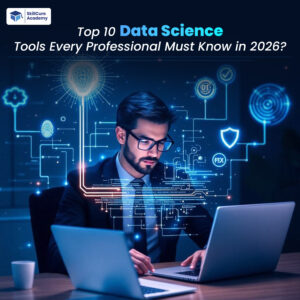

Data Science is evolving rapidly, and in 2026, professionals need to stay updated with the latest tools to stay competitive. Whether you are a beginner or an experienced data scientist, mastering the right tools can significantly improve your productivity, efficiency, and career growth.
In this blog, we will explore the top 10 data science tools every professional must know in 2026.
1. Python.
Python remains the most popular programming language for data science. It is easy to learn and has a vast ecosystem of libraries.
Key Libraries:
- Pandas
- NumPy
- Scikit-learn
- TensorFlow
Why Learn Python?
- Beginner-friendly
- Huge community support
- Widely used in AI and Machine Learning
2. R Programming.
R is widely used for statistical analysis and data visualization.
Best For:
- Statistical modeling
- Data analysis
- Academic research
3. SQL.
SQL (Structured Query Language) is essential for working with databases.
Why It Matters:
- Data extraction
- Data manipulation
- Used in almost every company
4. Power BI.
Power BI is a powerful business analytics tool by Microsoft.
Features:
- Interactive dashboards
- Real-time analytics
- Easy data visualization
5. Tableau.
Tableau is one of the best tools for data visualization.
Why Use Tableau?
- Drag-and-drop interface
- Advanced dashboards
- Used by top companies
6. Excel.
Excel is still a fundamental tool for data analysis.
Key Uses:
- Data cleaning
- Pivot tables
- Basic analytics
7. Apache Spark.
Apache Spark is used for big data processing.
Advantages:
- Fast processing
- Handles large datasets
- Supports multiple languages
8. TensorFlow.
TensorFlow is an open-source machine learning framework by Google.
Best For:
- Deep learning
- Neural networks
- AI model development
9. Jupyter Notebook.
Jupyter Notebook is widely used for coding and documentation.
Why Professionals Love It:
- Interactive coding
- Visualization support
- Easy sharing
10. Git & GitHub.
Version control is essential for every data professional.
Benefits:
- Track code changes
- Collaboration
- Portfolio building
Build Your Data Science Toolkit in 2026!
In 2026, mastering these data science tools is crucial for building a successful career in the field. From programming languages like Python and R to visualization tools like Power BI and Tableau, each tool plays a vital role in the data science workflow.
If you want to become a job-ready data professional, start learning these tools today and stay ahead in the competitive job market.
FAQs.
Q1. Which tool is best for beginners in data science?
Python is the best tool for beginners due to its simplicity and wide usage.
Q2. Is SQL necessary for data science?
Yes, SQL is essential for handling and querying data from databases.
Q3. Which tool is best for data visualization?
Tableau and Power BI are the most popular visualization tools.
Q4. Do I need to learn both Python and R?
Not necessarily. Python is sufficient for most roles, but R is useful for statistics-heavy tasks.
Q5. Is Excel still relevant in 2026?
Yes, Excel is still widely used for basic data analysis and reporting.