

Artificial Intelligence (AI) is transforming the way businesses operate, communicate, and innovate. From content creation and customer support to software development and data analysis, AI tools are helping organizations improve efficiency and productivity. As AI adoption continues to accelerate, the demand for professionals who can effectively interact with AI systems is growing rapidly.
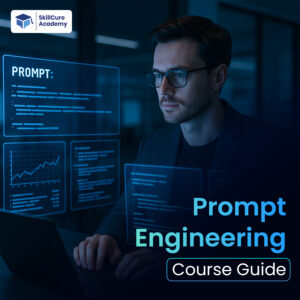
One of the most in-demand skills in the AI industry today is prompt engineering. This skill focuses on designing effective prompts that help AI tools generate accurate, relevant, and high-quality outputs. This Prompt Engineering Course Guide 2026 covers everything you need to know about learning prompt engineering, including the skills required, course curriculum, career opportunities, salary expectations, and future scope.
What is Prompt Engineering?
Prompt engineering is the process of creating, testing, and optimizing instructions given to AI models to achieve desired outcomes. A well-crafted prompt enables AI systems to provide more accurate and useful responses.
Whether you are generating content, conducting research, automating tasks, or developing AI-powered applications, effective prompting plays a crucial role in maximizing AI performance.
Example of Prompt Engineering:
| Basic Prompt | Optimized Prompt |
|---|---|
| Write a blog on digital marketing. | Write a 1000-word professional blog on digital marketing for beginners, including benefits, strategies, examples, and FAQs. |
| Explain data analytics. | Explain data analytics with career opportunities, salary details, required skills, and practical examples. |
The more context and clarity provided, the better the output generated by AI systems.
Why Learn Prompt Engineering in 2026?
Prompt engineering has emerged as a valuable skill because organizations are increasingly integrating AI into their daily operations. Professionals who understand how to communicate effectively with AI tools can improve productivity and deliver better results.
Benefits of Learning Prompt Engineering:
- High demand across multiple industries
- Excellent career growth opportunities
- Suitable for both technical and non-technical professionals
- Enhances productivity and efficiency
- Supports business automation initiatives
- Improves AI-generated content quality
- Future-ready skill with long-term relevance
As businesses continue investing in AI technologies, prompt engineering will remain a critical skill in the modern workforce.
Essential Skills Covered in a Prompt Engineering Course?
A professional prompt engineering course provides a blend of theoretical knowledge and practical training.
Core Skills:
- AI fundamentals
- Generative AI concepts
- Understanding Large Language Models (LLMs)
- Prompt writing techniques
- Context engineering
- Role-based prompting
- AI-powered research methods
- Content generation using AI
Advanced Skills:
- Chain-of-thought prompting
- Few-shot prompting
- Zero-shot prompting
- Prompt optimization techniques
- AI workflow automation
- Custom GPT development
- API integration basics
- AI ethics and governance
Developing these skills helps learners use AI systems more effectively across various business and professional applications.
Prompt Engineering Course Curriculum 2026?
Most industry-oriented training programs follow a structured curriculum designed to build practical expertise.
| Module | Topics Covered |
|---|---|
| AI Fundamentals | Introduction to AI and Machine Learning |
| Generative AI | Understanding LLMs and AI technologies |
| Prompt Engineering Basics | Prompt structures and frameworks |
| Advanced Prompting Techniques | Few-shot, zero-shot, and chain-of-thought prompting |
| AI Content Creation | Blogs, emails, reports, and marketing content |
| AI Productivity Tools | ChatGPT, Gemini, Claude, and Copilot |
| Workflow Automation | AI-powered business processes |
| Prompt Evaluation | Testing and optimization techniques |
| AI Ethics | Responsible AI practices |
| Capstone Project | Real-world prompt engineering implementation |
A comprehensive curriculum ensures learners gain both conceptual understanding and hands-on experience.
Who Should Enroll in a Prompt Engineering Course?
One of the biggest advantages of prompt engineering is its accessibility. Individuals from various educational and professional backgrounds can learn and apply these skills.
Ideal Candidates
- Students
- Fresh graduates
- Digital marketers
- Content writers
- Business analysts
- Data analysts
- Software developers
- Freelancers
- Entrepreneurs
- Working professionals
Most beginner-level courses do not require advanced technical knowledge, making prompt engineering an excellent entry point into the AI industry.
Career Opportunities After Completing a Prompt Engineering Course
The growing adoption of AI has created numerous career opportunities for skilled professionals.
Popular Job Roles:
| Job Role | Responsibilities |
|---|---|
| Prompt Engineer | Design and optimize prompts for AI systems |
| Generative AI Specialist | Implement AI-powered business solutions |
| AI Content Strategist | Develop AI-assisted content workflows |
| AI Consultant | Guide organizations in AI adoption |
| Automation Specialist | Build AI-driven automation processes |
| AI Research Assistant | Support AI experimentation and development |
| Digital Marketing Professional | Utilize AI tools for marketing campaigns |
As AI becomes a standard part of business operations, demand for these roles is expected to increase significantly.
Prompt Engineering Salary in India 2026?
Salary packages for prompt engineering professionals depend on experience, technical expertise, industry, and project portfolio.
| Experience Level | Average Salary Range |
|---|---|
| Fresher | ₹4 LPA – ₹8 LPA |
| 1–3 Years | ₹8 LPA – ₹15 LPA |
| 3–5 Years | ₹15 LPA – ₹25 LPA |
| Experienced Professionals | ₹25 LPA+ |
Professionals who combine prompt engineering with skills such as data analytics, software development, or digital marketing can command even higher compensation.
Factors Affecting Salary:
- Industry experience
- AI tool proficiency
- Project portfolio
- Professional certifications
- Communication skills
- Domain expertise
Building practical projects and gaining hands-on experience can significantly improve career prospects and earning potential.
How to Choose the Best Prompt Engineering Course?
Selecting the right training program is essential for developing industry-relevant skills and achieving career goals.
Important Factors to Consider:
- Updated curriculum aligned with 2026 AI trends
- Practical project-based learning
- Industry-recognized certification
- Experienced trainers
- Placement assistance
- Access to AI tools and resources
- Live mentorship sessions
- Positive student reviews
A course that emphasizes real-world implementation will provide better value than one focused solely on theory.
Benefits of Professional Prompt Engineering Training?
Professional training programs offer structured learning pathways and expert guidance that accelerate skill development.
Major Advantages:
- Expert mentorship
- Hands-on practical assignments
- Live industry projects
- Portfolio development
- Certification support
- Networking opportunities
- Career guidance
- Placement assistance
These benefits help learners gain confidence and become job-ready in a competitive AI-driven market.
Future Scope of Prompt Engineering?
The future of prompt engineering is highly promising. Organizations across healthcare, finance, education, retail, technology, and marketing are increasingly adopting AI-powered solutions to improve operations and customer experiences.
Emerging Trends:
| Trend | Impact |
|---|---|
| Growth of Generative AI | Increased demand for prompt engineers |
| AI Automation | More opportunities in workflow optimization |
| Enterprise AI Adoption | Expansion of AI-focused job roles |
| Custom AI Solutions | Greater need for advanced prompting skills |
| AI-Driven Decision Making | Increased reliance on AI specialists |
As AI technologies continue to evolve, professionals who understand prompt engineering will remain valuable contributors to digital transformation initiatives.
Conclusion.
Prompt engineering has become one of the most sought-after skills in the AI industry. Its accessibility, strong career prospects, and growing demand make it an excellent choice for students, fresh graduates, and working professionals.
By enrolling in a quality prompt engineering course, learners can develop practical AI skills, gain hands-on experience with leading AI tools, and prepare for exciting opportunities in the rapidly expanding world of Generative AI. Investing in prompt engineering education today can help build a successful and future-ready career in 2026 and beyond.
Frequently Asked Questions (FAQs).
1. What is prompt engineering?
Prompt engineering is the process of creating and optimizing instructions that help AI models generate accurate, relevant, and useful responses.
2. Do I need coding knowledge to learn prompt engineering?
No. Most beginner-level prompt engineering courses do not require coding knowledge, making them accessible to students and professionals from various backgrounds.
3. What career opportunities are available after completing a prompt engineering course?
Popular career options include Prompt Engineer, Generative AI Specialist, AI Consultant, AI Content Strategist, Automation Specialist, and AI Research Assistant.
4. What is the average salary of a prompt engineer in India?
Freshers can earn between ₹4 LPA and ₹8 LPA, while experienced professionals can earn ₹25 LPA or more depending on their skills and expertise.
5. Which AI tools are covered in prompt engineering courses?
Most courses provide training on tools such as ChatGPT, Google Gemini, Claude AI, Microsoft Copilot, Midjourney, Perplexity AI, and other Generative AI platforms.