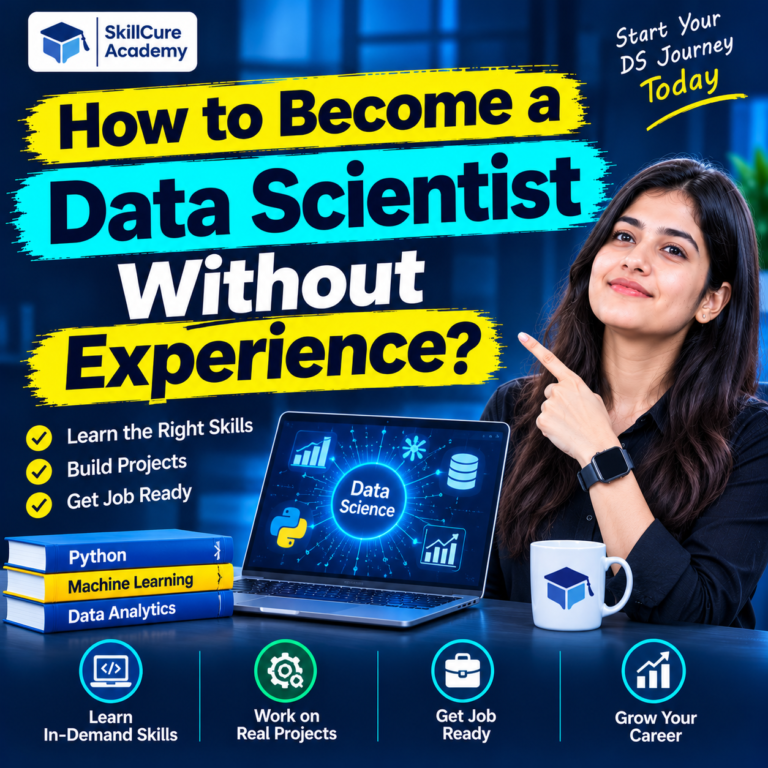



Are you planning to start a career in Data Science? Learning Python, SQL, Machine Learning, and statistics is important, but how will you demonstrate your skills to employers?
This is where a Data Science portfolio becomes important.
A Data Science portfolio is a collection of projects that showcases your technical knowledge, problem-solving abilities, and practical experience. It helps recruiters understand what you can actually do rather than just looking at your educational qualifications or certificates.
Whether you are a fresher, student, working professional, or career switcher, building a strong portfolio can improve your chances of getting noticed by recruiters.
If you are planning to learn these skills professionally, enrolling in a practical data science course in noida can help you gain the knowledge and project experience needed to build an impressive portfolio.
Let’s understand how to create a Data Science portfolio step by step.
What Is a Data Science Portfolio?
A Data Science portfolio is a collection of practical projects that demonstrate your ability to work with data, identify patterns, build predictive models, and generate meaningful business insights.
It acts as proof of your technical skills.
For example, instead of simply writing Python and Machine Learning on your resume, you can show a project where you used Python to predict customer behavior or analyze sales performance.
A good portfolio generally includes:
- Data cleaning and preprocessing projects.
- Exploratory Data Analysis (EDA).
- Python and SQL projects.
- Machine Learning models.
- Data visualization dashboards.
- Real-world business case studies.
- Project documentation and explanations.
Why Is a Data Science Portfolio Important?
Many freshers complete Data Science courses but struggle to explain their practical knowledge during interviews.
A portfolio helps solve this problem by showcasing your actual work.
Here are some important benefits:
| Benefits | How It Helps |
|---|---|
| Demonstrates practical skills | Shows how you apply theoretical knowledge. |
| Attracts recruiters | Gives employers something concrete to evaluate. |
| Improves interview confidence | Helps you explain projects with real examples. |
| Builds problem-solving ability | Develops your ability to solve business problems. |
| Supports freshers | Helps demonstrate skills even without work experience. |
| Improves your professional profile | Makes your GitHub and LinkedIn profiles stronger. |
Step-by-Step Guide to Building a Data Science Portfolio
Building a portfolio does not mean creating 20 different projects. You should focus on quality, practical applications, and proper documentation.
Here are seven steps to create a professional Data Science portfolio.
1. Learn the Essential Data Science Skills
Before creating projects, you should understand the important tools and technologies used in Data Science.
Start with the following skills:
| Skill | Why You Need It |
|---|---|
| Python | Data analysis, automation, and Machine Learning. |
| SQL | Extracting and managing data from databases. |
| Statistics | Understanding data patterns and relationships. |
| Pandas & NumPy | Data manipulation and numerical calculations. |
| Matplotlib & Seaborn | Data visualization. |
| Scikit-learn | Building Machine Learning models. |
| Power BI | Creating interactive business dashboards. |
You do not need to master everything before starting your portfolio. Begin with basic projects and gradually move towards advanced applications.
2. Start With Real-World Data Science Projects
Projects are the most important part of your portfolio.
Instead of creating projects only for practice, choose problems that businesses actually face.
Here are some project ideas for beginners:
| Project Name | Skills Required | Difficulty |
|---|---|---|
| Student Performance Analysis | Python, Pandas | Beginner |
| Sales Data Analysis | Python, SQL | Beginner |
| Customer Segmentation | Python, Clustering | Intermediate |
| House Price Prediction | Python, Regression | Intermediate |
| Customer Churn Prediction | Machine Learning | Advanced |
| Fraud Detection System | Python, Classification | Advanced |
Pro Tip: Start with 2–3 beginner projects and gradually create intermediate and advanced projects. Make sure you understand every step of your project.
3. Create a GitHub Profile
GitHub is one of the most useful platforms for showcasing your Data Science projects.
Recruiters and technical interviewers can explore your code, project structure, and documentation.
To create a professional GitHub profile:
- Create an account on GitHub.
- Upload your completed Data Science projects.
- Organize projects into separate repositories.
- Add a README file for every project.
- Include project objectives, tools, datasets, and results.
- Keep your repositories updated.
A well-organized GitHub profile makes it easier for recruiters to understand your technical capabilities.
4. Include Exploratory Data Analysis (EDA) Projects
Exploratory Data Analysis is an important part of Data Science.
It involves understanding datasets, identifying missing values, finding patterns, and discovering relationships between different variables.
You can create EDA projects using:
- Python
- Pandas
- NumPy
- Matplotlib
- Seaborn
Example Project: E-commerce Sales Analysis
You can analyze an e-commerce dataset to answer questions such as:
- Which products generate the highest revenue?
- Which months have the highest sales?
- Which customer segments purchase the most?
- What factors affect sales performance?
Present your findings using charts and graphs.
This demonstrates that you can convert raw data into meaningful business insights.
5. Build Machine Learning Projects
Once you understand data analysis, start working on Machine Learning projects.
Machine Learning projects demonstrate your ability to build predictive models using historical data.
Some useful project ideas include:
| Project | Machine Learning Technique |
|---|---|
| House Price Prediction | Linear Regression |
| Email Spam Detection | Classification |
| Customer Churn Prediction | Logistic Regression |
| Customer Segmentation | K-Means Clustering |
| Loan Approval Prediction | Decision Trees |
| Movie Recommendation System | Recommendation Algorithms |
For every project, explain the problem, dataset, algorithm, model evaluation, and final results.
Do not simply upload code. Explain why you selected a particular algorithm and what you learned from the results.
6. Create a Professional Portfolio Website
A portfolio website provides a central place where recruiters can explore your projects and professional information.
You can create a simple portfolio website using:
- HTML and CSS
- GitHub Pages
- Streamlit
- WordPress
Your website should include the following sections:
- About Me: A short introduction about your background.
- Technical Skills: Mention Python, SQL, Machine Learning, and other relevant tools.
- Projects: Display your best Data Science projects.
- Certifications: Include relevant professional certifications.
- Contact Information: Add your email and LinkedIn profile.
Keep the website simple, professional, and easy to navigate.
7. Share Your Projects on LinkedIn
Creating projects is important, but making people aware of your work is equally important.
LinkedIn helps you connect with recruiters, hiring managers, and other Data Science professionals.
Follow these practices:
- Share your completed projects.
- Upload project screenshots and dashboards.
- Explain the business problem you solved.
- Mention the technologies used.
- Add relevant Data Science keywords.
- Connect with industry professionals.
- Keep your GitHub and portfolio links updated.
Consistent project sharing can help increase your professional visibility.
Best Platforms to Build and Showcase Your Data Science Portfolio
You do not need expensive software to create a professional portfolio. Several free platforms can help you get started.
| Platform | Purpose |
|---|---|
| GitHub | Upload and showcase coding projects. |
| Kaggle | Practice Data Science and participate in competitions. |
| Google Colab | Write and execute Python notebooks online. |
| Streamlit | Build interactive Data Science applications. |
| Showcase projects and connect with recruiters. | |
| GitHub Pages | Host a personal portfolio website. |
These platforms are especially useful for students and freshers who want to demonstrate their skills without having professional work experience.
Common Mistakes to Avoid While Building a Data Science Portfolio
Many beginners make mistakes that reduce the effectiveness of their portfolios.
Avoid these common mistakes:
- Copying projects: Do not copy projects without understanding the code.
- Adding too many basic projects: Focus on quality rather than quantity.
- Ignoring documentation: Explain your project objectives and results.
- Not using real-world datasets: Work with practical datasets whenever possible.
- Ignoring business insights: Explain what your analysis actually means.
- Incomplete GitHub profiles: Keep your repositories organized.
- Not updating projects: Regularly improve your existing work.
Remember, recruiters are interested in your problem-solving abilities, not just the number of projects you have completed.
How Can a Data Science Course Help You Build a Strong Portfolio?
Learning Data Science independently is possible, but beginners sometimes struggle with choosing the right projects, understanding technical concepts, and applying their knowledge to real-world problems.
A structured learning program can make this process easier.
If you are searching for a data science course in noida, look for an institute that focuses on practical learning rather than only theoretical classes.
At Skillcure Academy, students can develop practical knowledge of important Data Science tools and technologies through hands-on learning and project-based training.
Some important areas to focus on include:
- Python programming and data analysis.
- SQL and database management.
- Statistics and exploratory data analysis.
- Machine Learning algorithms.
- Real-world Data Science projects.
- Practical assignments and presentations.
- Mock interviews and interview preparation.
At Skillcure Academy, students also get opportunities to demonstrate their knowledge through practical project presentations and mock interview activities.
These activities help students improve their technical understanding, communication, and confidence.
If you want to build a career in Data Science, start by developing your technical skills and creating projects that demonstrate your abilities.
Conclusion
Building a Data Science portfolio is one of the best ways to demonstrate your practical knowledge to potential employers.
You do not need years of experience or dozens of projects to get started. Begin with Python, SQL, data analysis, and basic Machine Learning projects. Gradually work on more advanced projects and showcase them through GitHub, LinkedIn, and a personal portfolio website.
Remember, a strong portfolio is not about how many projects you create. It is about how effectively you solve problems and explain your work.
If you want structured guidance and practical exposure, explore a professional data science course in noida that helps you develop industry-relevant skills and build a project-based portfolio.
Your next Data Science opportunity can start with your first project!
Frequently Asked Questions (FAQs)
1. How many projects should a Data Science portfolio have?
A beginner should aim for 3–5 quality projects covering data analysis, SQL, visualization, and Machine Learning. Focus on project quality and proper documentation rather than quantity.
2. Can I build a Data Science portfolio without work experience?
Yes. Freshers can create portfolios using publicly available datasets from platforms like Kaggle. Personal projects and practical case studies can demonstrate your technical abilities even without professional experience.
3. Is GitHub necessary for a Data Science portfolio?
GitHub is highly recommended because it allows you to showcase your Python code, SQL queries, notebooks, and project documentation. It also helps recruiters evaluate your technical skills.
4. Which projects are best for Data Science beginners?
Beginners can start with sales analysis, student performance analysis, customer segmentation, house price prediction, and customer churn prediction projects.
5. Where can I learn Data Science in Noida?
You can explore Skillcure Academy for practical Data Science training in Noida. The learning areas include Python, SQL, Machine Learning, data analysis, real-world projects, and interview preparation. The institute offers online and offline learning options.