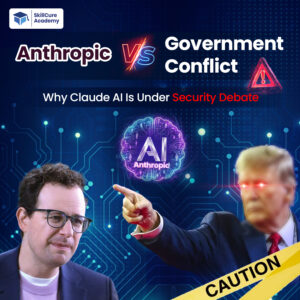

Artificial Intelligence is rapidly transforming industries, governments, and global security systems. As AI tools become more powerful, they are also creating debates around safety, ethics, and control. One of the most discussed controversies in the AI world right now involves the AI company Anthropic and concerns from government authorities regarding its AI model Claude.
The discussion is not just about one company or one AI model. It represents a larger global question: who should control powerful artificial intelligence systems and how they should be used.
What Is Claude AI?
Claude AI is an advanced AI assistant created by Anthropic, a company focused on building safe and responsible artificial intelligence. The AI model is designed to help users perform complex tasks using natural language interaction.
Claude AI is commonly used for:
- Content writing and research
- Programming and coding support
- Data analysis and insights
- Business and productivity assistance
Because of its strong reasoning capabilities, Claude has become one of the most powerful AI assistants available today. These abilities have also attracted interest from governments and defense organizations.
How the Conflict Started?
The debate began when government agencies reportedly explored using advanced AI systems for security, intelligence, and defense-related work. Systems like Claude AI could help analyze large amounts of data and support strategic decisions.
Some of the potential applications include:
- Intelligence data analysis
- Strategic and defense planning
- Monitoring large-scale information systems
- Cybersecurity threat analysis
However, Anthropic has built strict safety guardrails into its AI models. These limitations prevent the AI from being used in certain high‑risk situations.
Those restrictions include preventing use in:
- Mass surveillance systems
- Fully autonomous weapons
- Unsupervised military decision making
These limitations created tension between AI safety priorities and security interests.
Why Security Concerns Were Raised?
From a government perspective, artificial intelligence has the potential to significantly improve national security operations. AI can process massive datasets quickly and identify patterns that humans might miss.
Government experts believe AI could strengthen areas such as:
- Intelligence gathering.
- Cyber defense systems.
- National security monitoring.
- Military strategy development.
Some officials also argue that if responsible AI companies limit their technology too much, other countries may develop similar AI systems without restrictions, creating a strategic disadvantage.
Anthropic’s Ethical Stand!
Anthropic has positioned itself as one of the leading companies focused on AI safety. The company believes powerful AI systems must include strong protections to prevent harmful misuse.
Their safety philosophy focuses on reducing risks such as:
- Autonomous weapons making critical decisions.
- AI systems being used for large-scale surveillance.
- Uncontrolled deployment of powerful AI.
- Technology misuse causing societal harm.
Because of these concerns, Anthropic continues to emphasize strict guardrails for advanced AI models like Claude.
The Bigger Debate: AI Safety vs National Security?
The disagreement between AI developers and governments highlights one of the most important challenges of the modern technology era. Countries want to benefit from AI innovation while also managing the risks that come with powerful systems.
The two major perspectives include:
Government priorities:
- Access to advanced AI for defense and intelligence.
- Faster innovation in security technologies.
- Maintaining technological advantage over other nations.
Technology company priorities:
- Preventing dangerous misuse of AI.
- Ensuring ethical development practices.
- Maintaining safety guardrails in powerful models.
Balancing these two priorities is becoming one of the most complex challenges in global technology policy.
Global Impact of This Debate?
Although the discussion started around a single AI company, the implications affect the entire artificial intelligence ecosystem.
Possible global impacts include:
- Stronger government regulations on AI companies.
- New policies for military use of AI technology.
- Increased debate about AI ethics and safety.
- Growing competition between major AI companies.
This situation could shape how AI technologies are developed, regulated, and deployed across the world.
What Could Happen Next
The future of this conflict is still developing, but several outcomes are possible as governments and technology companies continue negotiations.
Possible future developments include:
- New AI governance policies.
- International discussions on AI safety rules.
- Increased cooperation between governments and AI companies.
- Greater investment in ethical AI development.
As artificial intelligence becomes more powerful, these discussions will play a critical role in shaping the future of technology.
The Future of AI Governance?
The ongoing debate between AI companies and government institutions shows that artificial intelligence will require clear global governance in the coming years.
Key areas that may shape the future include:
- Development of international AI safety regulations.
- Clear boundaries for military and surveillance use of AI.
- Collaboration between governments and private AI companies.
- Strong ethical frameworks for deploying advanced AI models.