

In today’s digital-first world, businesses rely heavily on data to make smarter decisions. Marketing Analytics is one of the most powerful tools that helps companies understand customer behavior, measure campaign performance, and optimize marketing strategies.
Whether you are a student, marketer, or business owner, understanding marketing analytics can give you a competitive edge in 2026 and beyond.
What is Marketing Analytics?
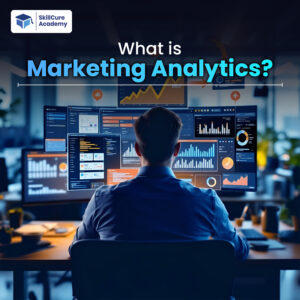
Marketing Analytics is the process of collecting, measuring, and analyzing marketing data to improve the effectiveness of marketing campaigns and strategies.
It helps businesses answer important questions like:
- Which marketing campaign is performing best?
- Where are customers coming from?
- What is the return on investment (ROI)?
- How can we improve conversion rates?
Why is Marketing Analytics Important?
1. Data-Driven Decision Making.
Marketing analytics allows businesses to move away from guesswork and make decisions based on real data.
2. Better Customer Understanding.
It helps you understand your audience’s behavior, preferences, and needs.
3. Improved ROI.
By analyzing campaign performance, businesses can focus on strategies that deliver better results.
4. Performance Tracking.
You can track the success of campaigns in real time and make quick adjustments.
Types of Marketing Analytics?
Marketing analytics can be divided into different types based on how data is used.
| Type | Description | Example |
|---|---|---|
| Descriptive Analytics | Explains past performance | Website traffic report |
| Diagnostic Analytics | Finds reasons behind results | Drop in conversions |
| Predictive Analytics | Forecasts future trends | Sales prediction |
| Prescriptive Analytics | Suggests actions | Marketing strategy recommendations |
These types help businesses understand not just what happened, but also what to do next.
Key Metrics in Marketing Analytics?
Tracking the right metrics is essential for successful marketing analytics.
| Metric | Meaning | Importance |
|---|---|---|
| Conversion Rate | % of users taking action | Measures success |
| CAC | Cost to acquire customer | Budget efficiency |
| ROI | Profit from campaigns | Overall performance |
| CTR | % of clicks on ads | Engagement level |
| Bounce Rate | Users leaving quickly | Website quality |
These metrics help marketers evaluate campaign performance effectively.
Tools Used in Marketing Analytics?
Various tools help in collecting and analyzing marketing data.
| Tool | Use Case |
|---|---|
| Google Analytics | Website tracking |
| HubSpot | Marketing automation |
| SEMrush | SEO & competitor analysis |
| Tableau | Data visualization |
Using the right tools can significantly improve your marketing insights.
How to Get Started with Marketing Analytics?
Step 1: Define Your Goals.
Set clear marketing objectives such as increasing website traffic or improving conversions.
Step 2: Collect Data.
Use tools like Google Analytics to gather relevant data.
Step 3: Analyze Data.
Identify patterns and trends in your data.
Step 4: Take Action.
Implement changes based on insights.
Step 5: Monitor and Optimize.
Continuously track performance and optimize campaigns.
Challenges in Marketing Analytics?
- Data Overload.
- Lack of Skilled Professionals.
- Data Privacy Concerns..
- Integration of Multiple Tools.
Future of Marketing Analytics?
The future of marketing analytics is driven by AI and automation. Businesses are increasingly using machine learning to predict customer behavior and personalize marketing strategies.
In 2026, marketing analytics will become more advanced, helping companies make faster and smarter decisions.
Final Thoughts!
Marketing Analytics is no longer optional—it is essential for success in today’s competitive market. By leveraging data effectively, businesses can improve performance, understand customers better, and maximize ROI.
If you want to build a career in marketing or data science, learning marketing analytics is a must-have skill.
Frequently Asked Questions (FAQs).
1. What is marketing analytics in simple terms?
Marketing analytics is the process of using data to measure and improve marketing performance.
2. Why is marketing analytics important?
It helps businesses make data-driven decisions, improve ROI, and understand customer behavior better.
3. Which tools are used in marketing analytics?
Popular tools include Google Analytics, HubSpot, SEMrush, and Tableau.
4. Is marketing analytics a good career?
Yes, it is a high-demand field with excellent career growth opportunities in 2026 and beyond.
5. What skills are needed for marketing analytics?
Key skills include data analysis, Excel, SQL, basic statistics, and knowledge of marketing tools.