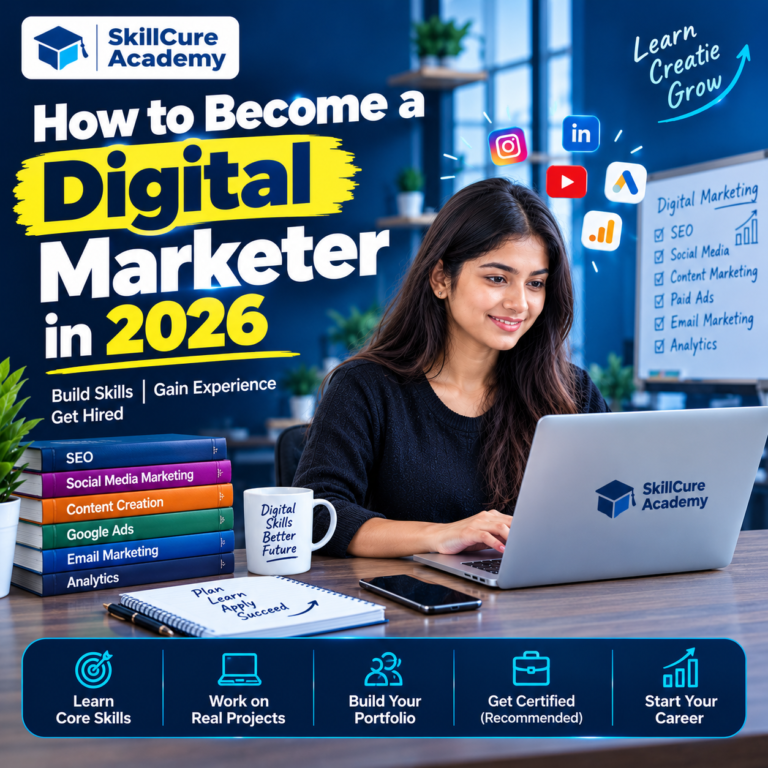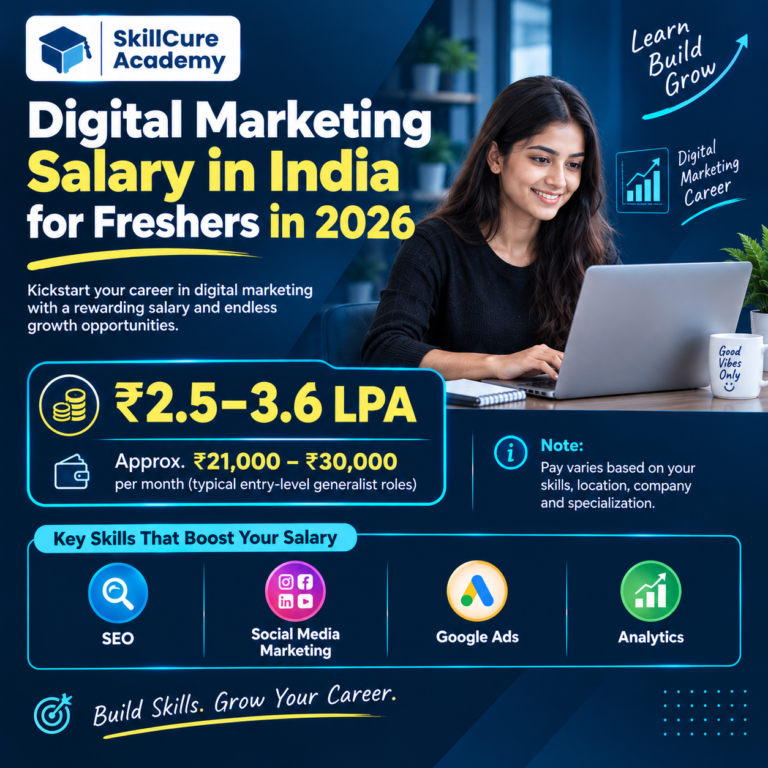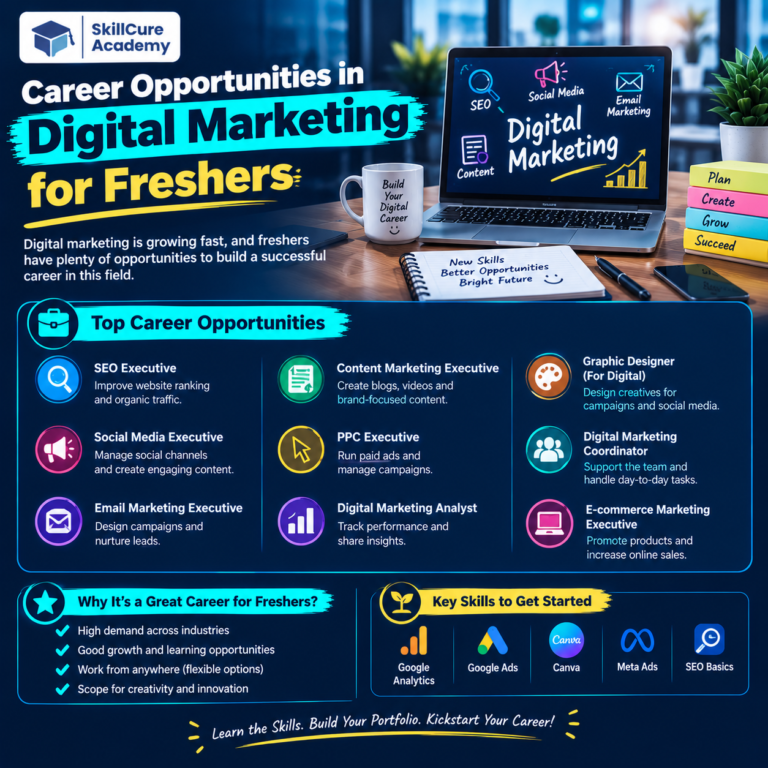


Digital marketing is one of the fastest-growing career fields in today’s digital world. Businesses of all sizes are shifting online and looking for skilled professionals who can help them increase brand awareness, generate leads, and improve sales through digital platforms. Whether you are a student, entrepreneur, freelancer, or working professional, learning digital marketing can open the door to many career opportunities.
Before enrolling in any course, it is important to understand the duration and syllabus of a digital marketing course. A good course not only teaches theory but also provides practical training through live projects, assignments, and certifications. In this blog, we will explain the digital marketing course duration, important syllabus modules, certifications, and career opportunities in detail.
What is a Digital Marketing Course?
A digital marketing course is a professional training program designed to teach individuals how to market products and services online using various digital channels. These channels include search engines, social media platforms, websites, emails, and online advertisements.
Digital marketing courses help students understand how businesses attract customers online and grow their digital presence. Most courses include practical learning, case studies, and hands-on projects.
Who Should Join a Digital Marketing Course?
Digital Marketing Course Duration?
The duration of a digital marketing course depends on the course level, learning mode, and practical training included in the program.
| Course Type | Duration | Suitable For |
|---|---|---|
| Basic Certification Course | 1–3 Months | Beginners & Students |
| Advanced Digital Marketing Course | 3–6 Months | Job Seekers |
| Professional Diploma Program | 6–12 Months | Career Professionals |
| Online Self-Paced Courses | Flexible | Working Professionals |
| Specialized Marketing Modules | 2–8 Weeks | Skill Enhancement |
Factors Affecting Course Duration?
Several factors influence how long a digital marketing course takes:
- Course Level – Beginner courses are shorter while advanced programs require more detailed learning.
- Practical Training – Courses with internships and live projects usually take more time.
- Learning Method – Online self-paced learning offers flexibility.
- Certifications Included – Programs with multiple certifications require additional preparation time.
- Specialization Modules – Some institutes offer advanced modules like AI marketing or performance marketing.
Digital Marketing Course Syllabus?
A professional digital marketing course includes multiple modules that cover different aspects of online marketing. Below are the major topics generally included in the syllabus.
1. Introduction to Digital Marketing.
This module provides an overview of digital marketing concepts and online business strategies.
| Topics Covered | Description |
|---|---|
| Basics of Digital Marketing | Introduction to online promotion |
| Traditional vs Digital Marketing | Understanding key differences |
| Digital Channels | SEO, SMM, PPC, Email Marketing |
| Customer Journey | Understanding customer behavior |
| Career Opportunities | Learning about digital marketing roles |
This module helps beginners understand how businesses use digital platforms for growth.
2. Search Engine Optimization (SEO).
SEO is one of the most important modules in digital marketing. It helps websites rank higher on search engines and generate organic traffic.
Topics Covered:
- Keyword research
- On-page SEO
- Off-page SEO
- Technical SEO
- Link building
- SEO audits
- Local SEO
| SEO Techniques | Purpose |
|---|---|
| On-Page SEO | Improve website content |
| Off-Page SEO | Build backlinks and authority |
| Technical SEO | Improve website performance |
| Local SEO | Increase visibility in local searches |
| Mobile SEO | Optimize for mobile users |
SEO is highly important because businesses rely on organic traffic for long-term growth.
3. Social Media Marketing (SMM).
Social media marketing focuses on promoting brands on social media platforms and engaging with audiences.
| Platform | Marketing Purpose |
|---|---|
| Brand awareness and engagement | |
| Advertising and lead generation | |
| B2B marketing and networking | |
| YouTube | Video marketing |
| X (Twitter) | Real-time audience engagement |
Topics Covered:
- Content strategy
- Social media campaigns
- Audience targeting
- Influencer marketing
- Social media analytics
Social media marketing helps businesses connect directly with their customers and build brand loyalty.
4. Google Ads & PPC Advertising.
Pay-Per-Click advertising helps businesses generate instant traffic through paid advertisements.
| PPC Ad Type | Purpose |
|---|---|
| Search Ads | Appear on search engines |
| Display Ads | Increase brand visibility |
| Video Ads | Promote video content |
| Shopping Ads | Promote e-commerce products |
| Remarketing Ads | Reconnect with past visitors |
Topics Covered:
- Campaign creation
- Keyword bidding
- Budget management
- Conversion tracking
- Ad optimization
PPC marketing is highly useful for businesses that want immediate results and leads.
5. Content Marketing.
Content marketing focuses on creating valuable content that attracts and engages users.
| Content Type | Usage |
|---|---|
| Blogs | Educate audiences |
| Videos | Increase engagement |
| Infographics | Present visual information |
| Case Studies | Showcase success stories |
| Social Media Content | Improve online interaction |
Topics Covered:
- Blog writing
- Copywriting
- Storytelling
- Video marketing
- Content strategy
High-quality content improves brand credibility and customer trust.
6. Email Marketing.
Email marketing is used to communicate with customers and promote products or services.
| Email Campaign Type | Objective |
|---|---|
| Welcome Emails | Introduce the business |
| Promotional Emails | Promote products |
| Newsletter Campaigns | Share updates |
| Drip Campaigns | Automate lead nurturing |
| Retargeting Emails | Reconnect with users |
Topics Covered:
- Email campaign creation
- Automation tools
- Lead nurturing
- Template design
- Email analytics
Email marketing remains one of the highest ROI marketing channels.
7. Web Analytics.
Analytics tools help marketers measure campaign performance and understand customer behavior.
| Analytics Tool | Purpose |
|---|---|
| Google Analytics | Track website traffic |
| Google Search Console | Monitor website performance |
| Heatmap Tools | Understand user interaction |
| Reporting Dashboards | Analyze campaign data |
Topics Covered:
- Traffic analysis
- User behavior tracking
- Goal setup
- Reporting and dashboards
Analytics helps businesses make better marketing decisions based on real data.
8. Affiliate Marketing.
Affiliate marketing allows businesses and individuals to earn commissions by promoting products online.
| Affiliate Model | Description |
|---|---|
| Pay Per Click | Commission per click |
| Pay Per Lead | Commission per lead |
| Pay Per Sale | Commission after successful sales |
Affiliate marketing is popular among bloggers, influencers, and content creators.
9. AI Tools in Digital Marketing.
Modern digital marketing courses now include AI-powered tools and automation strategies.
| AI Tool Usage | Benefits |
|---|---|
| AI Content Writing | Faster content creation |
| Chatbots | Automated customer support |
| Marketing Automation | Save time |
| Predictive Analytics | Better decision-making |
| Prompt Engineering | Improve AI-generated results |
AI tools are becoming essential for improving productivity and campaign performance.
Importance of Practical Training?
A good digital marketing course should provide practical exposure along with theoretical learning.
| Practical Activity | Benefit |
|---|---|
| Live Projects | Real-world experience |
| Internships | Industry exposure |
| Case Studies | Problem-solving skills |
| Portfolio Building | Showcase work to employers |
| Campaign Management | Learn live advertising |
Practical training helps students gain confidence and industry-ready skills.
Certifications Included in Digital Marketing Courses?
Most professional courses prepare students for industry-recognized certifications.
| Certification | Provider |
|---|---|
| Google Ads Certification | |
| Google Analytics Certification | |
| Meta Blueprint Certification | Meta |
| HubSpot Content Marketing | HubSpot |
| SEMrush SEO Certification | SEMrush |
These certifications improve credibility and increase job opportunities.
Career Opportunities After a Digital Marketing Course?
After completing a digital marketing course, students can apply for multiple job roles.
| Job Role | Main Responsibility |
|---|---|
| SEO Specialist | Improve search rankings |
| Social Media Manager | Manage social campaigns |
| PPC Expert | Run paid advertisements |
| Content Strategist | Plan content marketing |
| Email Marketing Specialist | Execute email campaigns |
| Performance Marketer | Improve campaign ROI |
| Freelance Digital Marketer | Work independently |
Digital marketing professionals are in demand across industries including e-commerce, education, healthcare, and technology.
Benefits of Learning Digital Marketing?
| Benefit | Description |
|---|---|
| High Demand | Companies need skilled marketers |
| Good Salary Packages | Competitive salary opportunities |
| Freelancing Opportunities | Work remotely with clients |
| Business Growth | Promote products online |
| Career Flexibility | Work in multiple industries |
Digital marketing is a future-focused skill with strong career potential.
Final Thoughts.
Digital marketing is a valuable skill for anyone who wants to build a successful career in today’s digital economy. A well-structured digital marketing course provides practical knowledge, industry certifications, and hands-on experience that can help students secure jobs or grow businesses online.
Choosing the right course with updated syllabus modules, practical projects, and certification training can help you become industry-ready and stay ahead in the competitive digital world.
FAQs.
1. What is the ideal duration for a digital marketing course?
Most professional digital marketing courses last between 3 to 6 months depending on the syllabus and practical training.
2. Is digital marketing a good career option?
Yes, digital marketing is one of the fastest-growing industries with excellent career opportunities.
3. Do digital marketing courses include practical training?
Most reputed institutes include live projects, internships, and practical assignments.
4. Can beginners learn digital marketing?
Yes, digital marketing courses are designed for beginners as well as experienced professionals.
5. Which skills are important in digital marketing?
SEO, social media marketing, content creation, PPC advertising, analytics, and communication skills are important in digital marketing.