


SAP MM (Materials Management) is one of the most important functional areas within SAP, focusing on procurement, purchasing, inventory management, material planning, and supplier-related processes. As Indian businesses continue to adopt ERP systems and modernize their supply chain operations, the career scope of SAP MM in India remains promising for graduates, working professionals, and candidates looking to move into ERP and supply chain careers.
SAP’s S/4HANA procurement ecosystem includes sourcing, purchasing, inventory management, supplier processes, analytics, and automation, making knowledge of modern SAP procurement processes increasingly valuable.
For candidates interested in business processes rather than programming, SAP MM can be an attractive career specialization. However, learning only transaction codes is not enough. Employers increasingly value professionals who understand both SAP S/4HANA functionality and real-world procurement and supply chain processes.
What is SAP MM?
SAP MM stands for SAP Materials Management. It is a core functional area used to manage an organization’s material procurement and inventory-related activities.
The module supports processes such as:
- Purchasing and procurement
- Purchase requisitions
- Purchase orders
- Goods receipts
- Invoice verification
- Inventory management
- Material master data
- Supplier management
- Source determination
- Material planning
- Stock transfers
- Procurement reporting
These functions make SAP MM particularly relevant to organizations where procurement, inventory, manufacturing, logistics, and supply chain operations are important.
Why is SAP MM Important for Businesses?
Every manufacturing and supply-oriented business needs materials, suppliers, purchasing processes, and inventory control. Managing these activities manually can result in errors, delays, excess inventory, and poor visibility.
SAP helps organizations centralize and automate these processes. Modern SAP S/4HANA procurement solutions provide centralized purchasing, supplier management, analytics, automation, and real-time insights.
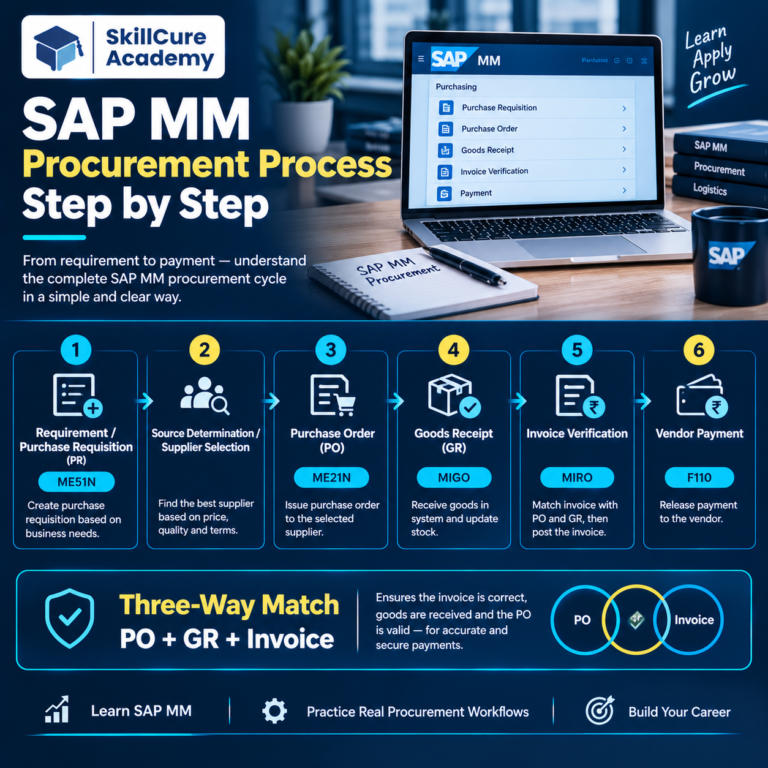
For example, a manufacturing company may use SAP MM to:
- Create purchase requisitions
- Select appropriate suppliers
- Generate purchase orders
- Track incoming materials
- Record goods receipts
- Monitor inventory
- Verify invoices
- Analyze procurement performance
Because these processes are closely connected to day-to-day business operations, SAP MM professionals can play an important role in ERP implementation, support, and business transformation projects.
Career Scope of SAP MM in India
The career scope of SAP MM in India extends beyond a single job title. Professionals can work in procurement, supply chain, ERP support, consulting, implementation, and business analysis.
Common career opportunities include:
| Job Role | Main Responsibilities |
|---|---|
| SAP MM Consultant | Configuration, implementation and business-process support |
| SAP MM Support Consultant | Resolving system issues and supporting users |
| SAP MM Functional Analyst | Analyzing requirements and improving SAP processes |
| Procurement Analyst | Managing and analyzing purchasing activities |
| Supply Chain Analyst | Monitoring materials and supply chain processes |
| SAP MM End User | Using SAP for purchasing and inventory operations |
| SAP Implementation Consultant | Supporting SAP implementation and rollout projects |
Freshers may enter through end-user, procurement, operations, support, or junior functional roles before progressing toward consulting positions.
Industries Hiring SAP MM Professionals
SAP MM skills are useful across industries where procurement and inventory management are important.
Some major sectors include:
- Manufacturing
- Automotive
- Pharmaceuticals
- FMCG
- Retail
- Logistics
- E-commerce
- Chemicals
- Engineering
- Construction
- Energy
- Telecommunications
- IT and consulting
Large organizations often have complex procurement and supply chain processes, creating opportunities for SAP professionals who understand both business operations and ERP systems.
SAP MM Career Path
One of the advantages of SAP MM is that professionals can gradually build their careers.
A typical career path can look like:
Graduate → SAP MM End User/Operations → SAP MM Support → Junior Functional Consultant → SAP MM Consultant → Senior Consultant → Team Lead/Project Manager
Professionals with implementation and project experience can progress into more senior consulting and leadership positions.
For example, a candidate may initially work with procurement operations and SAP transactions. After gaining practical experience, they can move into support and configuration. With exposure to implementation projects, testing, requirement gathering, and client communication, they can progress toward functional consulting roles.
Skills Required for an SAP MM Career
Learning SAP MM requires more than memorizing transaction codes. A strong candidate should understand the business processes behind the system.
1. Procurement Knowledge
Understanding purchase requisitions, purchase orders, quotations, contracts, vendors, and purchasing processes is essential.
2. Inventory Management
Candidates should understand stock movements, goods receipts, goods issues, stock transfers, and physical inventory.
3. SAP S/4HANA Knowledge
Modern SAP careers increasingly require familiarity with S/4HANA rather than focusing only on older SAP ERP environments. Understanding modern procurement processes can improve career opportunities.
4. Business Process Understanding
A good SAP MM professional should understand how procurement works in an actual organization.
5. Integration Knowledge
SAP MM interacts with other SAP areas, particularly finance and sales. Understanding basic integration with modules such as SAP FI and SAP SD can improve career opportunities.
6. Communication Skills
Consultants regularly communicate with users, business teams, technical teams, and clients. Good communication and requirement-gathering skills are therefore valuable.
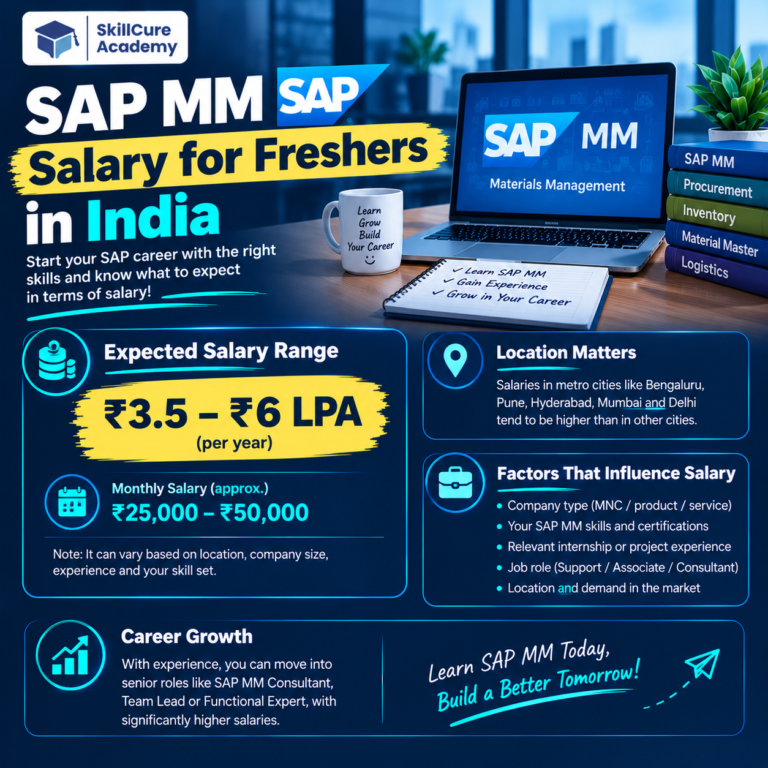
SAP MM Salary in India
Salary for SAP MM professionals varies significantly depending on experience, job role, organization, location, technical knowledge, and project exposure.
Freshers may start with entry-level procurement, operations, support, or ERP-related positions. With experience in SAP support and implementation projects, professionals can move into higher-paying consultant and senior consultant roles.
Rather than focusing only on a fixed salary figure, candidates should consider the skills that influence long-term earning potential:
- SAP S/4HANA knowledge
- Implementation experience
- Domain experience
- Procurement knowledge
- Integration skills
- Client-handling experience
- Project experience
- Certification and practical training
SAP MM and S/4HANA: What is the Future?
The future of SAP MM is increasingly connected with SAP S/4HANA, cloud procurement, automation, analytics, and intelligent business processes.
Modern procurement solutions provide capabilities for centralized procurement, sourcing, purchasing analytics, supplier management, and automated workflows.
This means candidates planning a long-term SAP career should not limit themselves to traditional SAP MM concepts. Learning how procurement works in an S/4HANA environment can make their skill set more relevant to modern organizations.
Professionals can also explore related technologies and areas such as:
- SAP S/4HANA
- SAP Ariba
- Procurement Analytics
- Supply Chain Management
- SAP Fiori
- Inventory Analytics
- Business Process Optimization
Who Should Learn SAP MM?
SAP MM can be suitable for candidates from different educational and professional backgrounds, particularly those interested in business operations and supply chain management.
It can be considered by:
- B.Com graduates
- BBA graduates
- MBA students
- Supply chain professionals
- Procurement professionals
- Inventory professionals
- Logistics professionals
- Working professionals
- ERP professionals
- Candidates looking to switch careers
Candidates with existing procurement, inventory, logistics, or business-process experience may find it easier to understand SAP MM because they already understand many of the underlying processes.
How to Start a Career in SAP MM
A practical learning roadmap can make the transition easier.
Step 1: Learn SAP and ERP Fundamentals
Understand what ERP systems are and how organizations use them.
Step 2: Learn Procurement Fundamentals
Understand purchasing, suppliers, inventory, material planning, and procurement cycles.
Step 3: Learn SAP MM
Study organizational structure, master data, purchasing, inventory management, material valuation, and invoice verification.
Step 4: Move Toward SAP S/4HANA
Learn modern procurement processes, Fiori applications, analytics, and S/4HANA functionality.
Step 5: Practice Real-World Scenarios
Work on practical cases involving purchase requisitions, purchase orders, goods receipts, inventory, and invoice verification.
Step 6: Build Domain Knowledge
Understand how SAP MM is used in manufacturing, retail, logistics, and other industries.
Step 7: Prepare for Interviews
Practice scenario-based questions instead of focusing only on definitions and transaction codes.
Is SAP MM a Good Career Choice in India?
The career scope of SAP MM in India remains relevant because procurement and inventory management are fundamental business functions. As organizations continue moving toward integrated ERP platforms, cloud systems, automation, and data-driven procurement, professionals who combine SAP knowledge with strong business-process understanding can find opportunities across multiple industries.
For beginners, the key is to focus on practical SAP MM knowledge, S/4HANA skills, procurement concepts, and hands-on project exposure rather than learning the software only from a theoretical perspective.
Frequently Asked Questions
1. Is SAP MM a good career for freshers in India?
Yes. Freshers can explore entry-level opportunities in procurement, inventory, ERP support, operations, and junior SAP-related roles. Building practical knowledge and understanding business processes can improve their chances of progressing toward SAP MM consulting.
2. Is coding required for SAP MM?
SAP MM is primarily a functional area, so extensive programming knowledge is generally not required. However, basic technical awareness and understanding of how SAP integrates with other systems can be useful.
3. What is the salary of an SAP MM professional in India?
Salary depends on experience, location, company, role, S/4HANA knowledge, and implementation experience. Entry-level professionals generally earn less than experienced consultants, while professionals with strong project and implementation experience can progress to significantly higher compensation.
4. Is SAP MM still in demand with the growth of S/4HANA?
Yes. SAP’s S/4HANA environment continues to include sourcing, procurement, inventory management, and materials-management processes. Learning modern S/4HANA procurement functionality is therefore important for professionals planning a long-term SAP career.
5. Can commerce graduates learn SAP MM?
Yes. Commerce graduates can learn SAP MM, particularly if they are interested in procurement, inventory, supply chain, and business operations. Their understanding of business and commercial processes can provide a useful foundation.