
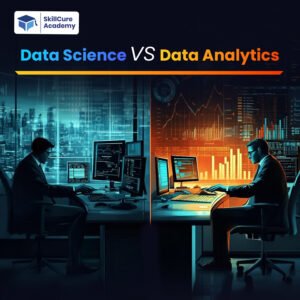

The demand for data professionals has grown rapidly over the past few years, making Data Science vs Data Analytics one of the most searched career comparisons. While both fields involve working with data, they serve different purposes and require different skills.
Many students and professionals are confused about whether they should become a Data Scientist or a Data Analyst. Both careers offer attractive salaries, strong job opportunities, and long-term growth, but choosing the right one depends on your interests, technical skills, and career goals.
In this blog, we will compare Data Science vs Data Analytics in detail, including responsibilities, skills, salary, career opportunities, and which field is better in 2026.
What is Data Science?
Data Science is the process of collecting, analyzing, and interpreting large volumes of structured and unstructured data using statistics, programming, and machine learning.
A Data Scientist develops predictive models, builds AI solutions, and extracts insights that help businesses make intelligent decisions.
Major Responsibilities:
- Building Machine Learning models
- Data preprocessing and cleaning
- Predictive analytics
- Statistical modeling
- Feature engineering
- AI model development
- Big Data analysis
- Business forecasting
What is Data Analytics?
Data Analytics focuses on analyzing historical and current business data to identify trends, patterns, and actionable insights.
A Data Analyst works with dashboards, reports, and visualizations to support business decision-making rather than creating AI or predictive models.
Major Responsibilities:
- Cleaning business data
- Creating dashboards
- Writing SQL queries
- Building Power BI and Tableau reports
- Business reporting
- Trend analysis
- KPI monitoring
- Data visualization
Data Science vs Data Analytics: Key Differences?
| Feature | Data Science | Data Analytics |
|---|---|---|
| Main Goal | Predict future outcomes | Analyze historical data |
| Programming | Advanced | Basic to Intermediate |
| Machine Learning | Required | Usually not required |
| Statistics | Advanced | Moderate |
| Data Visualization | Important | Very Important |
| Business Focus | Moderate | High |
| Coding Level | High | Medium |
| AI Development | Yes | No |
| Data Size | Large datasets | Structured business data |
| Complexity | High | Medium |
Skills Required in Data Science?
A Data Scientist requires a combination of technical, analytical, and mathematical skills.
Technical Skills:
- Python
- R Programming
- SQL
- Machine Learning
- Deep Learning
- Artificial Intelligence
- Statistics
- Probability
- Big Data
- Data Engineering Basics
- Cloud Platforms
- Feature Engineering
Soft Skills:
- Problem Solving
- Critical Thinking
- Communication
- Business Understanding
Skills Required in Data Analytics?
A Data Analyst focuses more on business intelligence and reporting.
Technical Skills:
- Advanced Excel
- SQL
- Power BI
- Tableau
- Python (Optional but recommended)
- Statistics
- Data Cleaning
- Dashboard Development
Soft Skills:
- Business Communication
- Analytical Thinking
- Presentation Skills
- Reporting
Educational Requirements?
Data Science:
Generally suitable for candidates from:
- Computer Science
- Engineering
- Mathematics
- Statistics
- Economics
- Physics
However, even non-technical students can enter Data Science by learning the required programming and mathematics skills.
Data Analytics:
Suitable for almost every graduate, including:
- B.Com
- BBA
- BA
- B.Sc
- BCA
- MBA
- Engineering
- Commerce
- Arts
This is one reason Data Analytics has become one of the most beginner-friendly IT careers.
Tools Used in Data Science?
Some commonly used tools include:
- Python
- R
- Jupyter Notebook
- TensorFlow
- PyTorch
- Scikit-Learn
- Pandas
- NumPy
- Hadoop
- Spark
- AWS
- Azure
Tools Used in Data Analytics?
Popular tools include:
- Microsoft Excel
- SQL
- Power BI
- Tableau
- Python
- Google Sheets
- Looker Studio
- Microsoft Fabric
Salary Comparison in India (2026)?
Salary depends on experience, location, company, and skill level.
| Experience | Data Analyst | Data Scientist |
|---|---|---|
| Fresher | ₹4–7 LPA | ₹7–12 LPA |
| 2–5 Years | ₹7–12 LPA | ₹12–22 LPA |
| 5–10 Years | ₹12–20 LPA | ₹22–40 LPA+ |
Although Data Scientists generally earn higher salaries, they also require more advanced technical expertise.
Job Roles in Data Analytics:
Popular job roles include:
- Data Analyst
- Business Analyst
- MIS Analyst
- Reporting Analyst
- BI Analyst
- Power BI Developer
- SQL Analyst
- Marketing Analyst
- Financial Analyst
- Operations Analyst
Job Roles in Data Science:
Career opportunities include:
- Data Scientist
- Machine Learning Engineer
- AI Engineer
- NLP Engineer
- Computer Vision Engineer
- Data Engineer
- Research Scientist
- Deep Learning Engineer
- AI Consultant
Which Career Has More Job Opportunities?
Currently, Data Analytics has a larger number of entry-level openings because almost every business needs reporting and dashboard professionals.
Data Science has fewer entry-level positions but offers excellent long-term growth and higher salary potential for experienced professionals.
Which Career is Easier?
For beginners, Data Analytics is generally easier because it focuses on:
- Excel
- SQL
- Power BI
- Business reporting
- Dashboard creation
Data Science is more challenging because it requires:
- Programming
- Statistics
- Mathematics
- Machine Learning
- Artificial Intelligence
Data Science vs Data Analytics: Which Should You Choose?
Choose Data Analytics if you:
- Are a beginner
- Prefer business reporting
- Want faster entry into IT
- Enjoy dashboard creation
- Have a non-technical background
Choose Data Science if you:
- Enjoy coding
- Like mathematics and statistics
- Want to build AI models
- Are interested in machine learning
- Aim for advanced technical roles
Future Scope in 2026?
Both careers have excellent future potential.
Data Analytics Growth:
- Increasing demand across industries
- Strong hiring for business intelligence roles
- Growing use of Power BI and SQL
- More opportunities in finance, healthcare, retail, and e-commerce
Data Science Growth:
- Rising adoption of AI
- Expansion of machine learning applications
- Demand for predictive analytics
- Growth in automation and intelligent systems
Both fields are expected to remain among the fastest-growing technology careers in the coming years.
Final Thoughts.
When comparing Data Science vs Data Analytics, there is no universal winner. Both careers are highly rewarding and in demand. If you are just starting your journey or transitioning from a non-technical background, Data Analytics offers a smoother learning curve and faster entry into the industry. On the other hand, if you enjoy programming, mathematics, and building intelligent systems, Data Science provides greater technical depth and higher long-term earning potential.
The best choice depends on your interests, learning commitment, and career aspirations. By developing practical skills, working on real-world projects, and continuously learning, you can build a successful career in either field.
Frequently Asked Questions (FAQs).
1. Which is better: Data Science or Data Analytics?
Both are excellent career options. Data Analytics is ideal for beginners, while Data Science is better suited for those interested in programming, machine learning, and AI.
2. Is Data Analytics easier than Data Science?
Yes. Data Analytics generally has a lower learning curve because it focuses on reporting, visualization, and business insights rather than advanced AI and machine learning.
3. Can a Data Analyst become a Data Scientist?
Yes. Many professionals begin as Data Analysts and later transition into Data Science by learning Python, statistics, and machine learning.
4. Which career has a higher salary?
Data Scientists typically earn higher salaries due to their advanced technical expertise, though experienced Data Analysts can also achieve competitive compensation.
5. Can students from a non-IT background pursue Data Science or Data Analytics?
Yes. Graduates from commerce, arts, science, and other non-IT backgrounds can enter either field by learning the required technical and analytical skills.