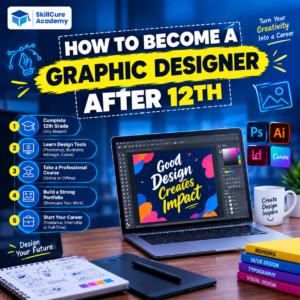

Are you creative, enjoy designing, and want to build a career after completing your 12th? Graphic designing can be an excellent career option for students who want to turn their creativity into professional skills. From creating social media posts and advertisements to designing logos, websites, and brand identities, graphic designers play an important role in modern businesses.
The best part is that you do not always need an expensive degree to become a graphic designer. With the right skills, practical experience, and a strong portfolio, you can start building your career after the 12th.
In this guide, we will explain how to become a graphic designer after 12th, which courses and software you should learn, what skills are required, and what career opportunities are available in India.
What Is Graphic Designing?
Graphic designing is the process of communicating ideas and messages through visual elements such as images, colours, typography, illustrations, and layouts.
Businesses use graphic design to promote their products, build brand awareness, attract customers, and communicate information effectively.
For example, whenever you see a social media advertisement, company logo, product packaging, YouTube thumbnail, or promotional banner, a graphic designer may have contributed to its creation.
Graphic designers work in industries such as digital marketing, advertising, media, education, e-commerce, entertainment, and information technology.
Can You Become a Graphic Designer After 12th?
Yes, you can become a graphic designer after completing your 12th. Students from Arts, Commerce, and Science backgrounds can all pursue graphic designing.
Your stream does not usually determine whether you can become a graphic designer. What matters more is your creativity, willingness to learn, understanding of design principles, and ability to use professional design tools.
There are several ways to enter this field:
- Join a graphic designing course.
- Pursue a diploma or degree in graphic design or visual communication.
- Learn design software through structured online courses.
- Practise by creating real-world design projects.
- Build a portfolio and apply for internships or entry-level jobs.
If your goal is to start working as early as possible, a practical, skill-based course combined with portfolio development can be a useful starting point.
Step-by-Step Guide to Becoming a Graphic Designer After 12th
Step 1: Understand the Basics of Graphic Design
Before learning professional software, understand the fundamental principles of design.
These principles help you create designs that look professional, communicate clearly, and attract the right audience.
Start by learning:
- Colour theory and colour combinations
- Typography and font selection
- Layout and composition
- Visual hierarchy
- Alignment and spacing
- Branding and visual communication
- Image selection and editing
For example, a social media advertisement should have a clear headline, readable text, suitable colours, and a visual element that supports the message.
Understanding these basics will help you create better designs, even when you start using advanced software.
Step 2: Learn Professional Graphic Designing Software
Learning design software is an important step towards becoming a professional graphic designer. Different tools are used for different types of projects.
| Software | Main Purpose |
|---|---|
| Adobe Photoshop | Image editing, photo manipulation, and creative graphics |
| Adobe Illustrator | Logos, vector illustrations, icons, and branding |
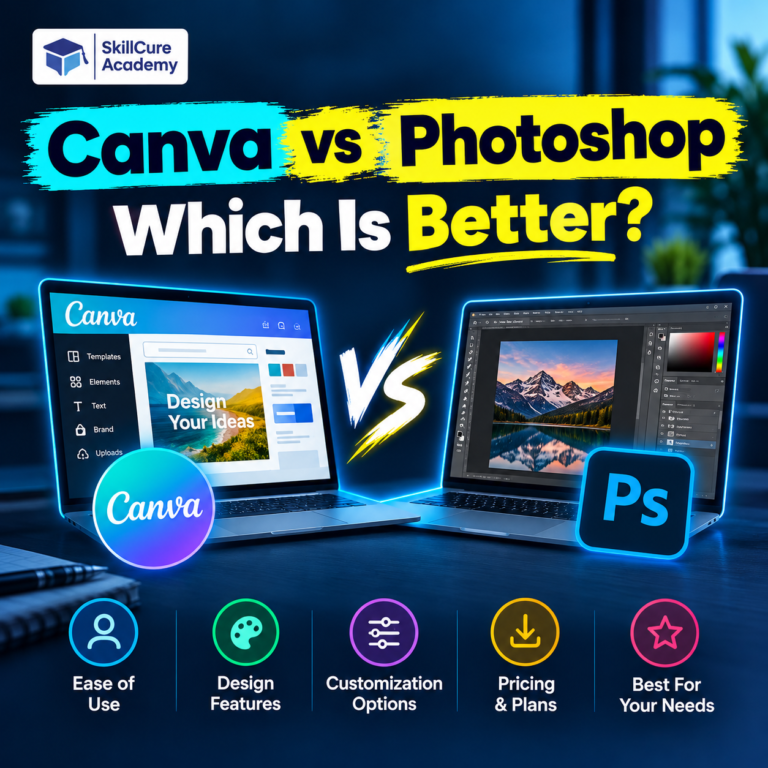
| Canva | Social media posts, presentations, and marketing creatives |
| Adobe InDesign | Brochures, magazines, catalogues, and page layouts |
| Figma | Website interfaces, app designs, and collaborative design work |
You do not need to master every tool immediately. Begin with one or two tools that match your career goals.
For example, if you want to create social media creatives and marketing advertisements, learning Photoshop and Canva can be a practical starting point. If you are interested in logo design and branding, Illustrator is also valuable.
As your skills improve, you can expand your knowledge to other tools.
Step 3: Practise by Creating Real Design Projects
Watching tutorials is helpful, but practical experience is essential.
Start creating small projects that help you understand how graphic design works in real situations.
Some beginner-friendly projects include:
- Logo designs for imaginary businesses
- Instagram posts for brands
- YouTube thumbnails
- Promotional posters
- Business cards
- Product advertisements
- Brochures and flyers
- Brand identity designs
For example, choose a fictional clothing brand and create its logo, Instagram posts, promotional banner, and business card.
This will help you understand how to maintain consistency across different marketing materials.
Try to create original designs rather than simply copying tutorials. When practising with references, focus on understanding the design decisions and developing your own approach.
Step 4: Build a Professional Portfolio
A portfolio is a collection of your best design projects. It allows employers and clients to evaluate your creativity, technical ability, and design thinking.
You do not need previous job experience to create a portfolio. You can include self-initiated projects, practice assignments, and concept designs.
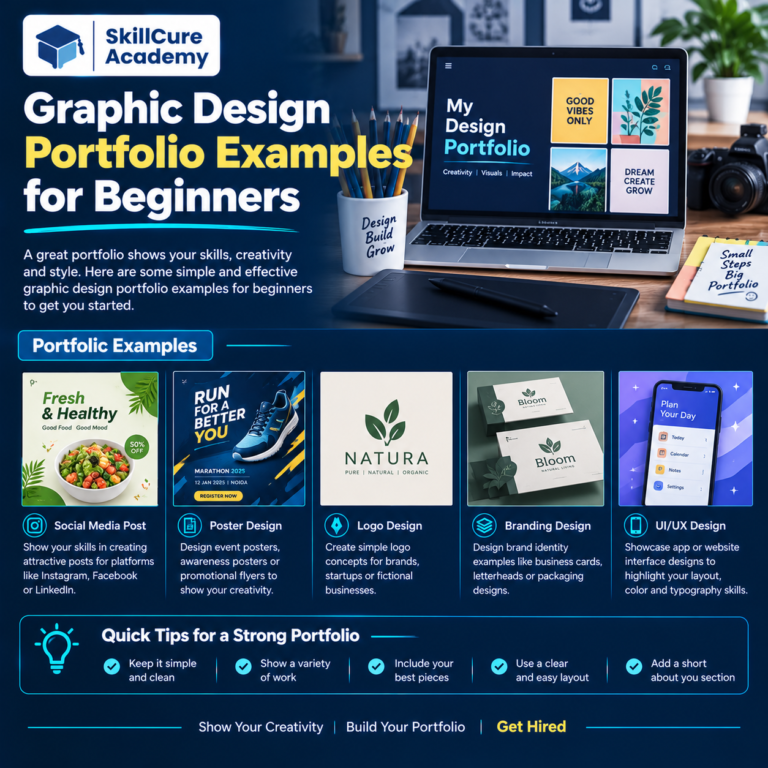
A beginner’s portfolio could contain:
- Three to five strong logo or branding projects
- Five to ten social media creatives
- Two or three advertising posters
- One brochure or marketing campaign
- A short explanation of the objective behind selected projects
Quality is more important than quantity.
For each project, explain the problem you wanted to solve, the audience you were designing for, and the choices you made regarding colours, typography, and layout.
You can publish your work on platforms such as Behance or create a personal portfolio website.
A well-organised portfolio can help you demonstrate your skills when applying for internships, jobs, or freelance assignments.
Step 5: Learn About Branding and Digital Marketing
Graphic designers often work with marketing teams, business owners, and social media managers.
Therefore, understanding the basics of branding and digital marketing can make your skills more useful to employers.
Learn how to create designs for different platforms, understand target audiences, maintain brand consistency, and adapt designs to different formats.
For example, a designer may need to create an Instagram post, a Facebook advertisement, a website banner, and a promotional email for the same campaign.
Each design must communicate the same message while following the requirements of its platform.
This is particularly useful if you want to work in a digital marketing agency or an organisation with an in-house marketing team.
Step 6: Apply for Internships, Jobs, or Freelance Projects
Once you have learnt the fundamentals and created a portfolio, start looking for opportunities to gain professional experience.
You can explore:
- Graphic Designer Intern
- Junior Graphic Designer
- Social Media Designer
- Creative Design Assistant
- Visual Design Intern
- Freelance Graphic Designer
Search for entry-level opportunities on job portals, professional networking platforms, and company career pages.
You can also approach local businesses, coaching institutes, restaurants, startups, and digital marketing agencies that may need design services.
When applying, share a portfolio link rather than relying only on a certificate.
For freshers, practical skills, communication, creativity, and the ability to meet deadlines can be important factors in the selection process.
Which Graphic Designing Course Is Best After 12th?
The best course depends on your career goals, budget, preferred learning style, and the time you can dedicate to learning.
Here are the main options to consider:
| Course Type | Best For | What to Consider |
|---|---|---|
| Certificate Course | Students who want focused, practical training | Check the software covered and project work |
| Diploma in Graphic Design | Students seeking structured design training | Review the duration and curriculum |
| Bachelor’s Degree in Design | Students interested in broader design education | Check eligibility, fees, and admission requirements |
| Online Graphic Design Course | Students who need flexible learning | Look for mentor support and practical assignments |
| Short-Term Software Course | Students who want to learn specific tools | Make sure you also learn design principles |
When comparing courses, look beyond the certificate. Check whether the course includes practical assignments, portfolio development, software training, design fundamentals, and feedback from trainers.
A course that helps you create professional projects can be more useful than one focused mainly on theoretical knowledge.
What Skills Are Required to Become a Graphic Designer?
Successful graphic designers combine creative thinking with technical knowledge.
Here are some important skills to develop:
1. Creativity: You should be able to generate ideas and communicate messages visually.
2. Colour Theory: Understanding colour combinations helps you create visually balanced and effective designs.
3. Typography: Selecting appropriate fonts and maintaining readability are essential design skills.
4. Software Knowledge: You should know how to use the tools required for your chosen area of design.
5. Attention to Detail: Proper spacing, alignment, image quality, and consistency improve the final result.
6. Communication: You need to understand client requirements and explain your design choices clearly.
7. Time Management: Designers often work on multiple projects with different deadlines.
8. Adaptability: Design trends and tools change, so continuous learning is important.
You can develop these skills through regular practice, constructive feedback, and exposure to different types of design projects.
Graphic Designer Salary in India After 12th
Your salary as a graphic designer depends on your skills, portfolio, location, employer, and experience. Completing the 12th does not automatically determine your salary; your practical abilities and the responsibilities of your role also matter.
The following figures are indicative estimates for career planning, not guaranteed salary offers.
| Experience Level | Approximate Annual Salary |
|---|---|
| Fresher / Entry-Level Designer | ₹1.8 lakh–₹3.6 lakh |
| Designer with 1–3 Years of Experience | ₹3 lakh–₹6 lakh |
| Experienced Graphic Designer | ₹5 lakh–₹9 lakh |
| Senior Designer / Design Specialist | ₹7 lakh–₹12 lakh or more |
Actual salaries can fall outside these ranges, and specialised positions may offer different compensation.
Freshers can improve their prospects by building a strong portfolio, learning industry-standard tools, completing practical projects, and gaining internship experience.
Freelance income is different from a fixed salary. It depends on your clients, pricing, project volume, experience, and ability to find consistent work.
Career Opportunities After Learning Graphic Designing
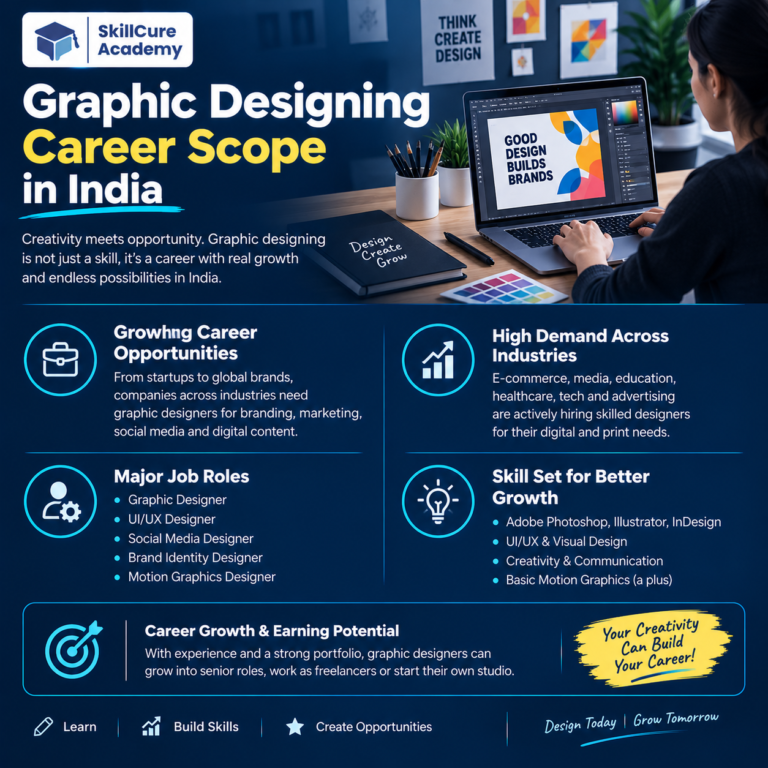
Graphic designing offers several career paths. You can choose a specialisation based on your interests and strengths.
1. Graphic Designer
Create logos, advertisements, brochures, posters, and other visual materials for businesses.
2. Social Media Designer
Design posts, stories, promotional creatives, and campaign visuals for social media platforms.
3. Branding Designer
Help businesses develop their visual identity through logos, colour systems, typography, and brand guidelines.
4. Advertising Designer
Create visual content for advertising campaigns, promotional materials, and marketing communication.
5. YouTube Thumbnail Designer
Design thumbnails that communicate a video’s topic and attract viewers.
6. UI Designer
Design the visual layouts of websites and mobile applications. This career path usually requires additional knowledge of interface design, usability, and tools such as Figma.
7. Freelance Graphic Designer
Work independently with businesses, agencies, creators, and other clients.
8. Motion Graphics Designer
Create animated graphics and visual content. This specialisation requires additional training in motion design and animation software.
As you gain experience, you can specialise in one area or combine graphic designing with other creative and marketing skills.
Is Graphic Designing a Good Career in 2026?
Graphic designing can be a promising career in 2026 for students who enjoy visual communication and are willing to keep improving their skills.
Businesses continue to use visual content across websites, social media, digital advertising, e-commerce, presentations, and brand communication.
At the same time, design tools and AI-powered platforms are changing how creative work is produced. Basic templates and repetitive tasks can increasingly be automated, so designers should focus on skills that require stronger judgement and creativity.
These include understanding client requirements, developing original concepts, maintaining brand consistency, creating effective layouts, and solving communication problems through design.
Learning AI-assisted design tools can also help you explore ideas and improve your workflow. However, understanding design principles remains important because software alone cannot guarantee effective visual communication.
Students who combine software knowledge, creative thinking, practical experience, and a strong portfolio can prepare themselves for a range of entry-level opportunities.
Why Choose Skillcure Academy for Skill-Based Career Training?
If you are planning to build a career in the creative or digital industry after the 12th, choosing the right training environment can help you develop job-relevant skills.
At Skillcure Academy, students can explore professional skill-based courses designed around practical learning and career preparation. The academy offers training in areas such as Digital Marketing, Data Analytics, Data Science, and other career-focused domains.
For students interested in graphic designing, it is important to choose a learning path that develops software proficiency, design fundamentals, practical project experience, and portfolio-building skills.
Before enrolling in any graphic designing programme, ask about the tools covered, hands-on assignments, trainer guidance, course duration, and career support.
You can contact Skillcure Academy to enquire about available creative and digital skills training options and identify a course that matches your career goals.
Conclusion
Becoming a graphic designer after 12th is achievable if you follow a structured learning path. Start by understanding design fundamentals, learn relevant software, practise through real-world projects, and build a portfolio that demonstrates your abilities.
You can then apply for internships, entry-level jobs, or freelance assignments to gain experience and improve your skills.
Remember that a certificate can support your learning, but your portfolio shows what you can actually create. Focus on practical knowledge, consistent practice, and continuous improvement to build a stronger foundation for your graphic designing career.
Ready to start your career after 12th? Explore skill-based training opportunities, develop your creative abilities, and take your first step towards a professional career.
Frequently Asked Questions (FAQs)
1. Can I become a graphic designer after 12th without a degree?
Yes. You can learn graphic designing through certificate courses, diplomas, online training, and independent practice. A strong portfolio and relevant skills can help you apply for entry-level roles, although some employers may prefer or require formal qualifications.
2. Which software should I learn first for graphic designing?
Adobe Photoshop and Canva are useful starting points for creating social media graphics and marketing creatives. You can then learn Adobe Illustrator for logos and vector graphics or other tools according to your chosen specialisation.
3. How long does it take to learn graphic designing after 12th?
The time required depends on your learning schedule and goals. You may learn basic tools and design principles in a few months, but developing professional-level skills and a strong portfolio generally requires continued practice and feedback.
4. What is the salary of a graphic designer fresher in India?
An entry-level graphic designer may earn approximately ₹1.8 lakh to ₹3.6 lakh per year, although salaries vary by location, company, portfolio, and skills. These figures are indicative estimates rather than guaranteed offers.
5. Is graphic designing a good career for students after 12th in 2026?
Yes. It can be a suitable career for students who enjoy creativity, visual communication, and digital tools. Learning design software, branding, marketing basics, and AI-assisted workflows can help you prepare for different opportunities in the creative industry.