


In today’s data-driven business environment, organizations rely heavily on professionals who can transform raw data into actionable insights. The demand for business analysts continues to grow across industries, making it one of the most promising career paths in 2026. Understanding the Skills Required for Business Analytics Jobs is essential for anyone looking to build a successful career in this field.
Business analytics professionals help organizations improve decision-making, optimize processes, identify opportunities, and solve business challenges using data and technology.
What is Business Analytics?
Business Analytics involves collecting, analyzing, and interpreting data to support strategic business decisions. Business analysts act as a bridge between business stakeholders and technical teams, ensuring that organizational goals are achieved through data-driven solutions.
Professionals in this field work with business data, reporting tools, databases, and visualization platforms to provide meaningful insights.
Why Are Business Analytics Skills Important?
As companies generate more data than ever before, skilled analysts are needed to convert information into business value.
Key Benefits of Business Analytics Skills:
- Improved decision-making processes
- Better operational efficiency
- Increased profitability
- Enhanced customer experience
- Strong career growth opportunities
- High-demand job prospects
Top Skills Required for Business Analytics Jobs?
1. Data Analysis.
Data analysis forms the foundation of business analytics. Analysts must be able to collect, clean, organize, and interpret data effectively.
| Data Analysis Skills | Purpose |
|---|---|
| Data Cleaning | Improve data quality |
| Trend Analysis | Identify patterns |
| Data Validation | Ensure accuracy |
| Reporting | Present findings |
| Interpretation | Generate insights |
Why It Matters:
- Helps identify business opportunities
- Supports strategic planning
- Improves business performance
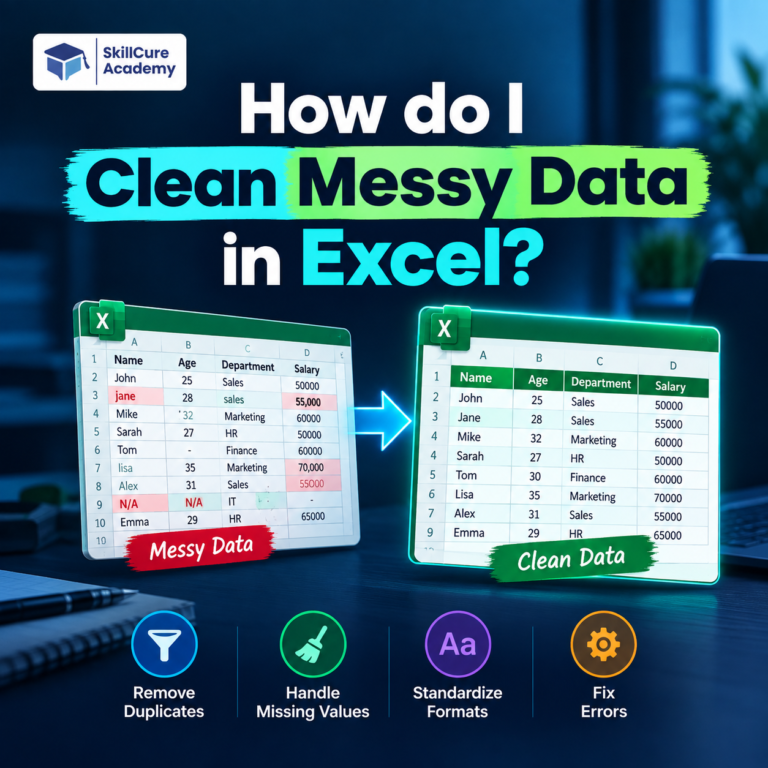
2. Advanced Microsoft Excel.
Excel remains one of the most widely used tools in analytics due to its flexibility and ease of use.
| Excel Feature | Business Use |
|---|---|
| Pivot Tables | Data summarization |
| XLOOKUP/VLOOKUP | Data retrieval |
| Conditional Formatting | Visual analysis |
| Dashboards | Reporting |
| Advanced Formulas | Automation |
Essential Excel Skills:
- Data manipulation
- Dashboard creation
- Data validation
- Formula management
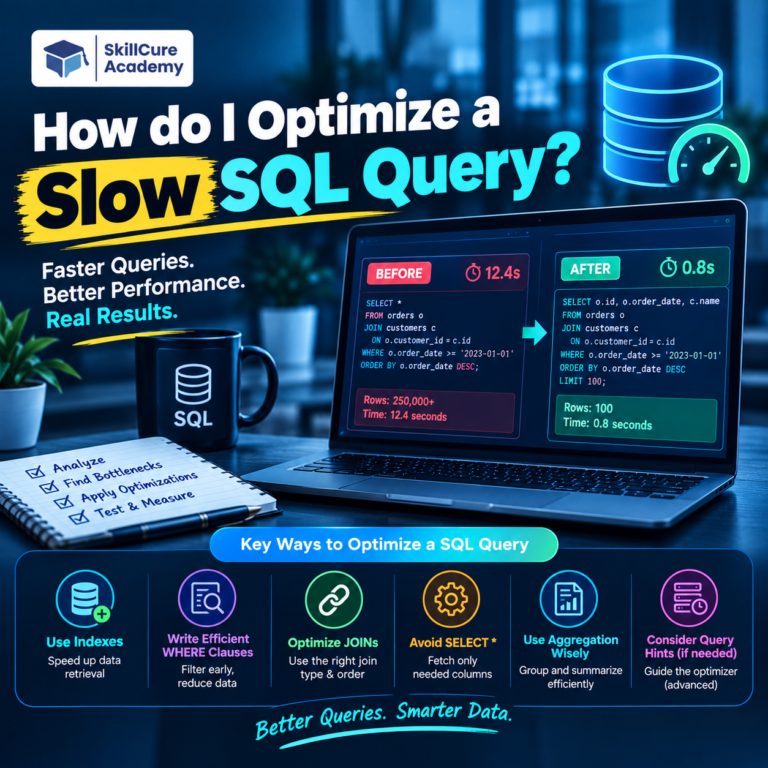
3. SQL (Structured Query Language).
SQL is a must-have skill for accessing and managing data stored in databases.
| SQL Skill | Application |
|---|---|
| SELECT Queries | Data extraction |
| JOINS | Combining datasets |
| Aggregations | Summarizing information |
| Filtering | Data segmentation |
| Subqueries | Advanced analysis |
Benefits of SQL:
- Faster data retrieval
- Better database management
- Improved reporting capabilities
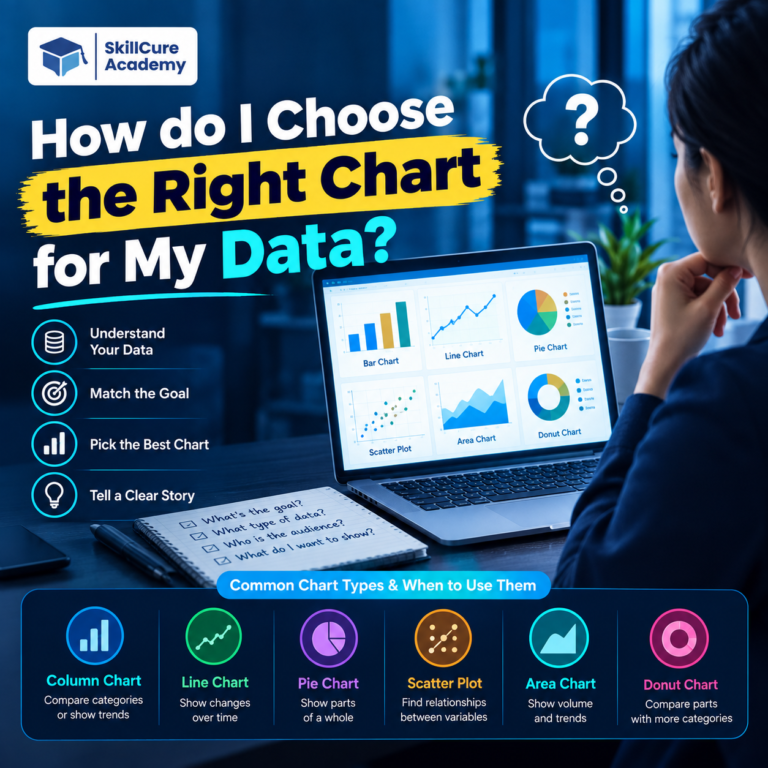
4. Data Visualization.
Presenting data effectively is critical for business decision-making. Visualization tools make complex information easier to understand.
| Visualization Tool | Primary Use |
|---|---|
| Power BI | Business dashboards |
| Tableau | Interactive reporting |
| Looker Studio | Marketing analytics |
| Excel Charts | Quick insights |
| Qlik Sense | Data exploration |
Key Advantages:
- Simplifies complex data
- Improves stakeholder understanding
- Supports faster decisions
5. Statistical Analysis.
Statistics helps analysts identify trends, relationships, and business patterns from large datasets.
| Statistical Concept | Usage |
|---|---|
| Mean & Median | Performance measurement |
| Correlation | Relationship analysis |
| Regression | Forecasting |
| Probability | Risk analysis |
| Hypothesis Testing | Decision support |
Important Outcomes:
- More accurate predictions
- Better business planning
- Stronger analytical insights
6. Business Intelligence Tools.
Business Intelligence (BI) platforms are essential for modern analytics professionals.
| BI Tool | Common Usage |
|---|---|
| Power BI | Reporting |
| Tableau | Visualization |
| SAP Analytics Cloud | Enterprise analytics |
| Qlik Sense | Self-service BI |
| Looker | Data exploration |
Why Learn BI Tools?
- High industry demand
- Better reporting efficiency
- Enhanced data storytelling
7. Critical Thinking Skills.
Business analysts must evaluate situations objectively and identify the best solutions.
Critical thinking helps professionals understand business challenges and recommend practical improvements.
Core Critical Thinking Skills:
- Root cause analysis
- Decision evaluation
- Risk assessment
- Strategic planning
8. Communication Skills.
Even the best analysis has little value if it cannot be communicated effectively.
| Communication Area | Importance |
|---|---|
| Presentations | Stakeholder engagement |
| Documentation | Project clarity |
| Requirement Gathering | Business understanding |
| Report Writing | Information sharing |
| Meetings | Collaboration |
Essential Communication Abilities:
- Verbal communication
- Written communication
- Active listening
- Presentation skills
9. Problem-Solving Ability.
Organizations hire business analysts to solve business challenges and improve performance.
Problem-solving skills allow analysts to identify inefficiencies and recommend actionable solutions.
Examples of Business Problems:
- High operational costs
- Low customer retention
- Inefficient processes
- Revenue decline
10. Business Process Knowledge.
Understanding how businesses operate is equally important as technical expertise.
| Business Area | Analytical Focus |
|---|---|
| Sales | Revenue growth |
| Marketing | Campaign performance |
| Finance | Budget optimization |
| Operations | Process efficiency |
| HR | Workforce analytics |
Benefits of Business Knowledge:
- Better recommendations
- Improved stakeholder trust
- More impactful analysis
11. Python for Business Analytics.
Python is increasingly being used for automation, data analysis, and predictive analytics.
| Python Library | Purpose |
|---|---|
| Pandas | Data analysis |
| NumPy | Numerical computing |
| Matplotlib | Data visualization |
| Scikit-learn | Machine learning |
| OpenPyXL | Excel automation |
Why Learn Python?
- Automates repetitive tasks
- Handles large datasets
- Supports advanced analytics
12. Requirement Gathering.
Requirement gathering is a crucial responsibility of business analysts. It ensures that business needs are clearly understood before project execution.
| Requirement Activity | Objective |
|---|---|
| Stakeholder Meetings | Gather expectations |
| Documentation | Define scope |
| Business Analysis | Understand requirements |
| Process Mapping | Visualize workflows |
| Validation | Confirm objectives |
Key Responsibilities:
- Understanding business goals
- Creating requirement documents
- Managing stakeholder expectations
Technical Skills vs Soft Skills.
Successful business analysts need a balance of technical and interpersonal capabilities.
| Technical Skills | Soft Skills |
|---|---|
| SQL | Communication |
| Excel | Leadership |
| Power BI | Teamwork |
| Tableau | Problem-Solving |
| Python | Adaptability |
| Statistics | Critical Thinking |
Career Opportunities in Business Analytics.
Professionals possessing the Skills Required for Business Analytics Jobs can pursue multiple career paths.
Popular Job Roles:
- Business Analyst
- Data Analyst
- Business Intelligence Analyst
- Product Analyst
- Reporting Analyst
- Operations Analyst
- Financial Analyst
- Marketing Analyst
- Analytics Consultant
- Data Visualization Specialist
How to Develop Business Analytics Skills.
Building a successful career requires continuous learning and practical experience.
Steps to Get Started:
- Learn Advanced Excel
- Master SQL fundamentals
- Gain expertise in Power BI or Tableau
- Study statistics and analytics concepts
- Work on real-world projects
- Learn Python basics
- Improve communication skills
- Earn industry certifications
- Build a professional portfolio
- Practice business case studies
Conclusion.
The Skills Required for Business Analytics Jobs continue to evolve as businesses increasingly depend on data-driven decision-making. Professionals who develop expertise in Excel, SQL, Power BI, Tableau, Python, statistics, communication, and problem-solving will have a strong competitive advantage in the job market.
By combining technical knowledge with business understanding and interpersonal skills, aspiring analysts can secure rewarding career opportunities and contribute significantly to organizational success in 2026 and beyond.
Frequently Asked Questions (FAQs).
1. What are the most important skills required for Business Analytics jobs?
The most important skills include Excel, SQL, Power BI, Tableau, data analysis, statistics, communication, and problem-solving.
2. Is SQL necessary for becoming a Business Analyst?
Yes. SQL is one of the most commonly requested skills in business analyst and analytics job descriptions.
3. Do Business Analysts need programming knowledge?
Basic programming knowledge, especially Python and SQL, is highly beneficial for modern analytics roles.
4. Which visualization tool should I learn first?
Power BI is often recommended for beginners because of its user-friendly interface and widespread industry adoption.
5. Can freshers apply for Business Analytics jobs?
Yes. Freshers can enter the field by learning analytics tools, working on projects, earning certifications, and building a strong portfolio.