

Business analytics has become a critical function for organizations looking to make data-driven decisions. With the growing volume of business data, companies require powerful analytics tools to transform raw information into meaningful insights. Whether you are a beginner entering the analytics field or a professional seeking to improve reporting and visualization capabilities, selecting the right business analytics tool is essential.
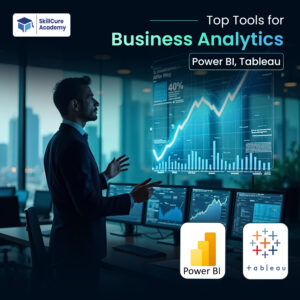
Among the most popular platforms, Power BI and Tableau consistently rank as industry leaders. These tools help organizations analyze data, create interactive dashboards, and make informed business decisions. This article explores the top tools for business analytics, their features, advantages, and how they compare in real-world business environments.
Why Business Analytics Tools Are Important.
Business analytics tools help organizations:
- Convert raw data into actionable insights.
- Monitor key performance indicators (KPIs).
- Improve decision-making processes.
- Identify trends and opportunities.
- Enhance operational efficiency.
- Create visual reports and dashboards.
- Support strategic business planning.
Without modern analytics tools, businesses may struggle to understand complex datasets and make timely decisions.
Key Features to Look for in Business Analytics Tools.
When selecting a business analytics platform, organizations should evaluate the following features:
| Feature | Importance |
|---|---|
| Data Visualization | Converts data into charts, graphs, and dashboards. |
| Data Integration | Connects with multiple data sources. |
| Real-Time Analytics | Enables live monitoring of business performance. |
| User-Friendly Interface | Simplifies report creation and analysis. |
| Scalability | Supports growing business data requirements. |
| Security | Protects sensitive business information. |
| Collaboration Features | Allows teams to share reports and insights. |
Top Tools for Business Analytics.
1. Power BI.
Power BI is Microsoft’s business intelligence and analytics platform. It is widely used by organizations of all sizes due to its affordability, seamless integration with Microsoft products, and powerful visualization capabilities.
Key Features of Power BI.
- Interactive dashboards and reports.
- Integration with Excel, Azure, and Microsoft 365.
- AI-powered insights and forecasting.
- Real-time data monitoring.
- Cloud and on-premises deployment options.
- Strong data modeling capabilities.
Advantages of Power BI.
- Cost-effective for businesses.
- Easy integration with Microsoft ecosystems.
- Strong community support.
- Regular feature updates.
- Suitable for both beginners and advanced users.
Best Use Cases.
- Financial reporting.
- Sales performance analysis.
- Customer behavior analytics.
- Operational dashboards.
- Executive reporting.
2. Tableau.
Tableau is one of the most powerful data visualization platforms available today. It is known for its intuitive drag-and-drop interface and advanced visualization capabilities.
Key Features of Tableau.
- Advanced interactive visualizations.
- Extensive data source connectivity.
- Real-time analytics.
- AI-driven insights with Tableau Pulse.
- Mobile analytics support.
- Strong data storytelling features.
Advantages of Tableau.
- Exceptional visualization quality.
- User-friendly dashboard creation.
- Handles large datasets efficiently.
- Strong analytics capabilities.
- Highly customizable reports.
Best Use Cases.
- Business intelligence reporting.
- Marketing analytics.
- Customer experience analysis.
- Data storytelling.
- Enterprise-level analytics projects.
Power BI vs Tableau Comparison.
| Feature | Power BI | Tableau |
|---|---|---|
| Ease of Use | Easy for Microsoft users | Easy with drag-and-drop interface |
| Pricing | More affordable | Higher pricing |
| Visualization Quality | Excellent | Outstanding |
| Data Handling | Strong | Very Strong |
| Integration | Best with Microsoft ecosystem | Broad third-party integration |
| Learning Curve | Moderate | Moderate |
| AI Features | Advanced AI integration | AI-powered analytics available |
| Enterprise Adoption | High | High |
Other Popular Business Analytics Tools.
3. Qlik Sense.
Qlik Sense offers self-service analytics with powerful associative data modeling.
Key Features.
- Interactive dashboards.
- AI-assisted analytics.
- Self-service reporting.
- Data integration capabilities.
- Cloud-based deployment.
Best For.
- Mid-sized and large enterprises.
- Advanced analytics projects.
- Data discovery and exploration.
4. Looker Studio.
Looker Studio is a free business intelligence tool that helps users create visual reports and dashboards.
Key Features.
- Easy dashboard creation.
- Google ecosystem integration.
- Real-time reporting.
- Collaborative analytics.
Best For.
- Marketing analytics.
- Website performance tracking.
- Small businesses and startups.
5. SAP Analytics Cloud.
SAP Analytics Cloud combines business intelligence, planning, and predictive analytics within a single platform.
Key Features.
- Predictive analytics.
- Financial planning tools.
- Cloud-based reporting.
- Enterprise-level security.
Best For.
- Large enterprises.
- Financial forecasting.
- Strategic planning.
6. IBM Cognos Analytics.
IBM Cognos Analytics provides AI-driven reporting and enterprise business intelligence solutions.
Key Features.
- Automated insights.
- Data preparation tools.
- Advanced reporting.
- AI-assisted analytics.
Best For.
- Large organizations.
- Complex reporting environments.
- Enterprise business intelligence.
Factors to Consider When Choosing a Business Analytics Tool.
Budget.
Organizations should evaluate licensing costs, maintenance expenses, and scalability requirements before selecting a platform.
Ease of Learning.
Tools like Power BI and Tableau offer extensive learning resources, making them suitable for both beginners and experienced professionals.
Integration Requirements.
Choose a tool that integrates seamlessly with existing business systems, databases, and cloud platforms.
Data Volume.
Businesses handling large datasets should prioritize platforms with strong performance and scalability.
Reporting Needs.
Different tools excel in different reporting scenarios. Consider whether your focus is dashboard creation, predictive analytics, or enterprise reporting.
Career Opportunities After Learning Business Analytics Tools.
Professionals skilled in business analytics platforms are highly sought after across industries.
| Job Role | Average Demand |
|---|---|
| Business Analyst | Very High |
| Data Analyst | Very High |
| BI Developer | High |
| Reporting Analyst | High |
| Analytics Consultant | High |
| Data Visualization Specialist | Growing |
| Business Intelligence Manager | High |
Employers often look for candidates with hands-on experience in Power BI, Tableau, SQL, Excel, and data visualization techniques.
Future of Business Analytics Tools.
The future of business analytics is being shaped by artificial intelligence, machine learning, and automation. Modern analytics platforms are increasingly incorporating AI-driven insights, natural language queries, predictive analytics, and automated reporting capabilities.
Organizations are investing heavily in analytics technologies to gain competitive advantages, making expertise in tools like Power BI and Tableau more valuable than ever.
Conclusion.
Business analytics tools play a vital role in transforming data into actionable business insights. While Power BI stands out for its affordability and Microsoft integration, Tableau excels in advanced data visualization and storytelling capabilities. Other tools such as Qlik Sense, Looker Studio, SAP Analytics Cloud, and IBM Cognos Analytics also provide powerful analytics solutions for different business needs.
The right tool depends on an organization’s budget, technical requirements, scalability needs, and reporting goals. For professionals looking to build a successful analytics career, mastering Power BI and Tableau can significantly improve job prospects and open doors to high-demand roles in business intelligence and data analytics.
Frequently Asked Questions (FAQs).
1. Which is better for beginners, Power BI or Tableau?
Power BI is generally considered more beginner-friendly, especially for users familiar with Microsoft Excel and other Microsoft products.
2. Is Tableau better than Power BI?
Tableau offers more advanced visualization capabilities, while Power BI provides better value for money and stronger Microsoft integration.
3. Are business analytics tools in demand?
Yes, business analytics tools are highly in demand as organizations increasingly rely on data-driven decision-making.
4. Can I learn Power BI and Tableau without coding?
Yes, both Power BI and Tableau can be learned without extensive coding knowledge, although SQL skills can provide additional advantages.
5. Which business analytics tool is most used in companies?
Power BI and Tableau are among the most widely used business analytics and business intelligence tools across industries.